
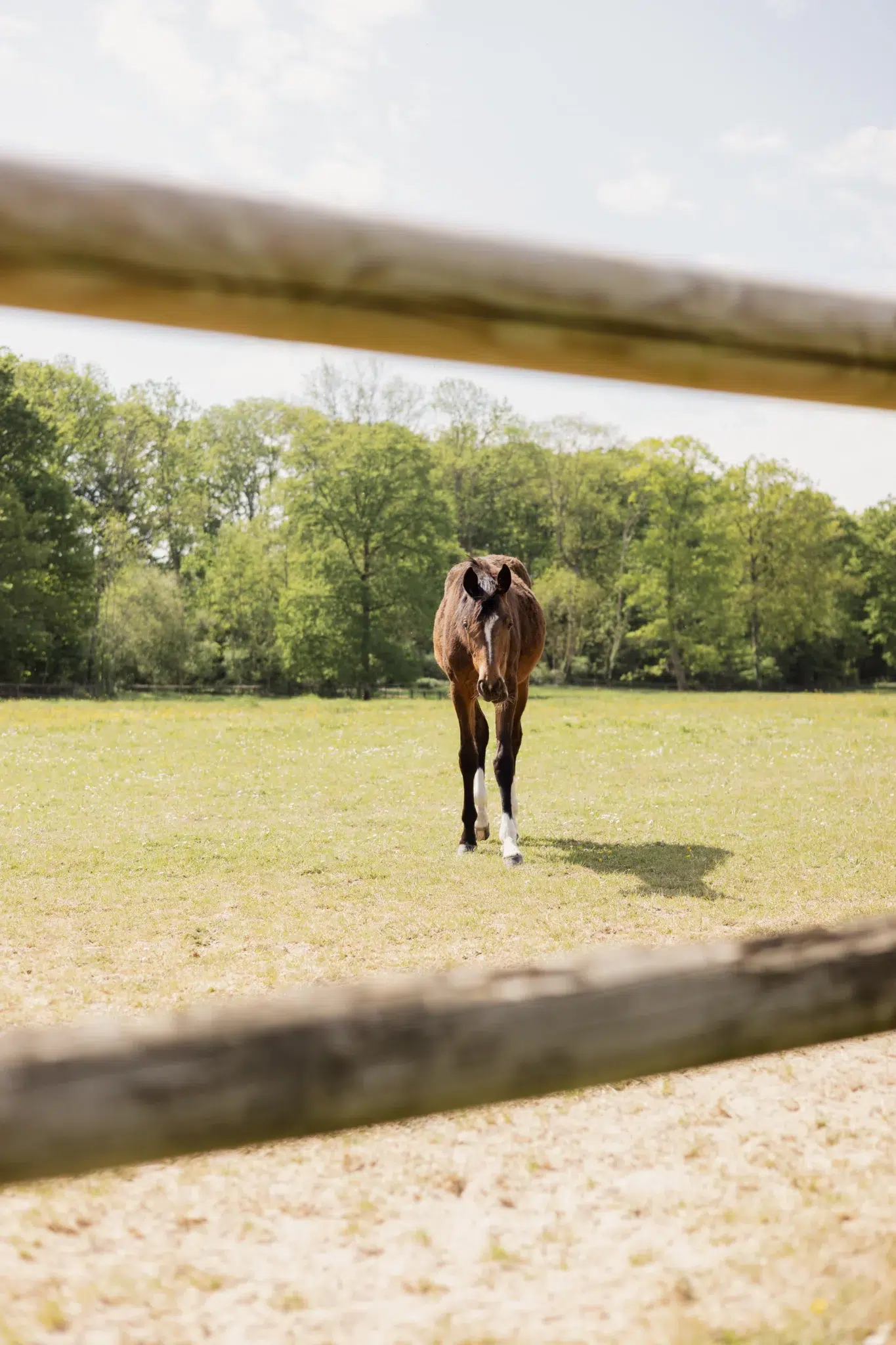
When one thinks of equine parasitism, one often imagines an adult horse in the meadow, infested with strongles after a grazing season. And yet, it's the foal that is the most vulnerable target of parasitesFrom his first days of life.
The parasites that threaten him are different from those of the adult horse, the risks are more serious and some molecules commonly used in adult horses are to be prohibited in the young. In fact, contrary to an idea received, colostrum does not protect the foal against parasites (only against bacterial infections).
The parasitism of the foal therefore requires a specific approach, organised by age group, with a protocol adapted to each stage of its development. This article gives you the keys to understanding which parasites threaten your foal, when and how to protect it effectively.
Why is the foal more vulnerable than the adult horse?
The foal is born with a naive immune system; that is, he was never exposed to pathogens before he was born. Colostrum, this first milk rich in antibodies that the mare produces within hours of the foal, provides immediate protection against bacterial infections. But these maternal antibodies have no effect on intestinal parasites.
Outcome: the foal can infest from its first days of life, via breast milk for certain parasites, or by ingestion of eggs present in its environment as soon as it begins to graze. Its vulnerability is greatest during the first six months, during which time its pest immunity is not yet developed.
Another often underestimated crucial point is that eggs of foals of previous years survive 2 to 3 years in the ground, sometimes up to 10 years according to some studies. A healthy, green and well-maintained pasture can therefore be massively contaminated if it has received foals in past years. In fact, the dascaris eggs have an extremely resistant shell that allows them to survive frost, heat and even traditional disinfectants.
The direct consequence of this resistance is that unlike the adult horse in which reasoned vermifugation (based on coproscopy) is now recommended, foal vermifugation remains systematic until one year of age. Prior coproscopy is not required before 6 months to decide the treatment: determinate at fixed dates, targeting parasites specific to each age group.
💡 In the adult horse, this logic is different. Discover why systematic vermifugation is questioned.
Foal parasites by age group
The foal's parasitism evolves with him. Each growth phase corresponds to specific parasites, with appropriate risks and treatments.
0 to 2 months: Strongyloids Westeri
The first parasite to threaten the foal is the Strongyloids westeritransmitted Directly via breast milk from the breastfed. The mare is home to dormant larvae that are active when laid down, migrate to the mammary glands and pass into the milk.
The main symptom is aqueous diarrhoea about 10-14 days of life, at the time of « heat of milk ». Good news: the foal quickly develops immunity against this parasite between 3 and 10 months.
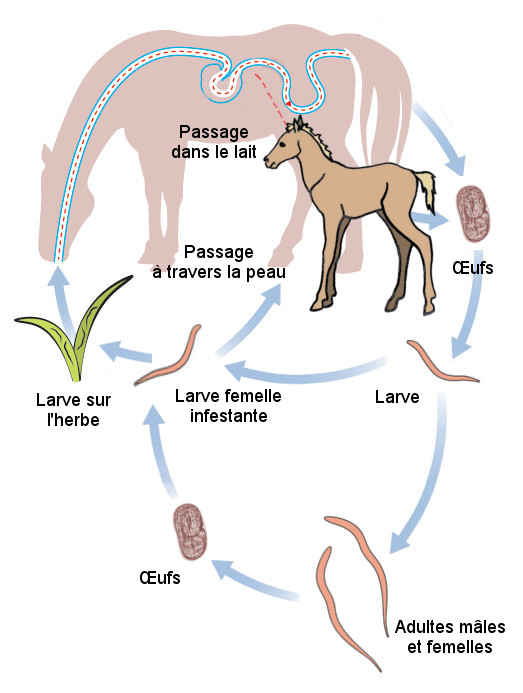
Source: ESCCAP
Treatment - only if diarrhoea is confirmed by the veterinarian (fenbendazole with a specific dose). No systematic treatment for 2 months. Locking a foal too young for medical reasons does not bring any benefit and unnecessarily exposes the organism to chemical molecules.
2 to 6 months: Ascaris, the main danger
Parascaris equorum is the most dangerous parasite For the foal. This massive round worm can reach 40 cm in length. A parasitic foal can spread up to 50 million eggs a day in the environment. These eggs have an extremely resistant shell and survive 2 to 3 years in the soil, even if exposed to frost.
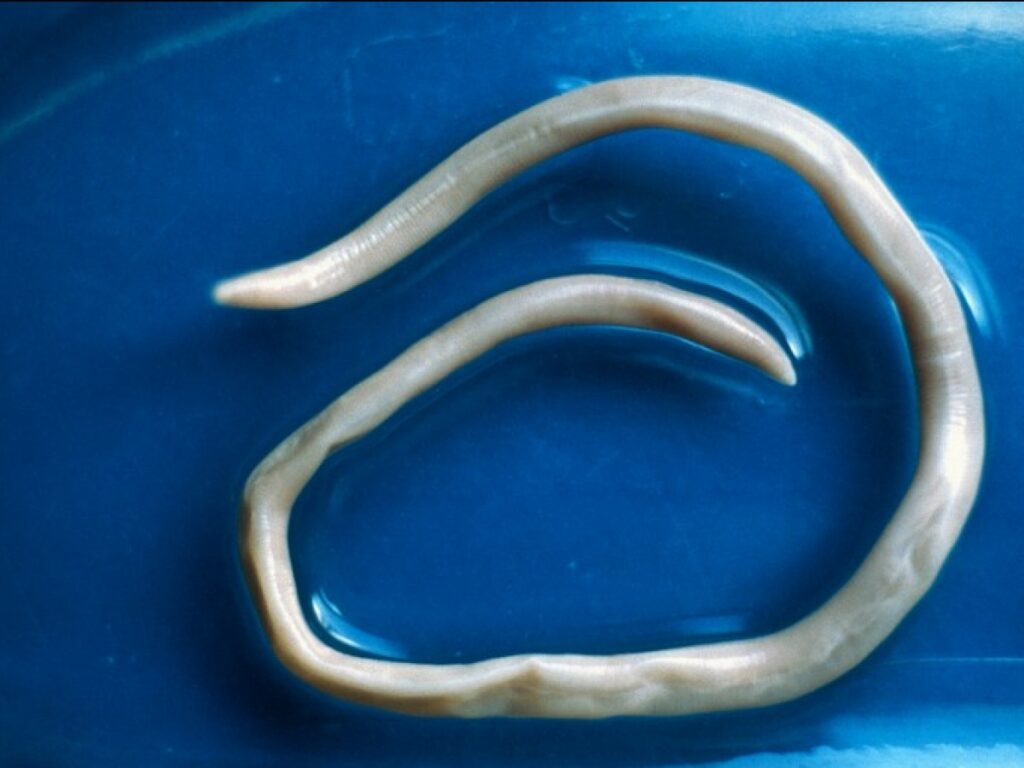
Source: Science and the Future
The larval migration cycle lasts 10-12 weeks:
ingestion → intestine → liver → lungs → trachea → swallowing → small intestine.
Symptoms to be monitored: dry cough, nasal jetting (pulmonary phase), then stunting, dull hair, diarrhoea, decreased shape. In the most serious cases, the foal may also be at risk of obstruction or even fatal intestinal rupture.
Critical point : macrocyclic lactones (ivermectin, moxidectin) to be prohibited before 6 months, because the ascaris developed resistance there. The studies conducted in France and the United States show that the ivermectin is more effective against Parascaris equorum in many farms. Recommended molecules are pyrantel and fenbendazole, alternating.
From 6 to 12 months: the little trickles take over
From 6 months, immunity against ascaris develops, but the small strongles (cyatostomas) become the parasitic threat of the main foal. These worms live in the large intestine and cause chronic diarrhea, weight loss and stunting.
The data show that 39% of foals aged 3 to 9 months are parasitized by the little trickles in Normandy. This figure increases with age and grazing time. From 6 months, ascaris and small strongles coexist, but effective molecules against one another are not against the other. It is precisely at this age that coproscopy becomes indispensable. to guide the choice of deworming.
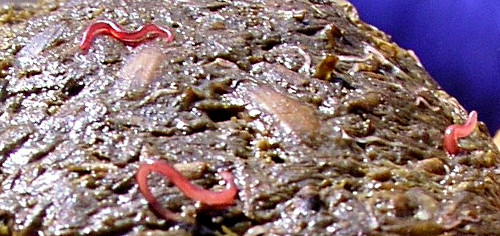
Source: ESCCAP
Autumn from 5-6 months : the Tenias (Anoplocephala perfoliata) add to the table. Studies by IFCE (French horse and horse riding institute) show that 26% of foals between 6 and 24 months Tenias. These flat worms attach to the ileo-caecal junction (between the small intestine and the caecum) and can cause serious colic. Treatment specific to praziquantel (or double dose of pyrantel) is required in autumn.
The foal vermifugation protocol step by step
Here the recommended vermifugation protocol for the first year of life of the foal, based on the recommendations of IFCE and ESCCAP.
Age | Parasite of the target foal | Recommended Molecule | Note |
0–2 months | Strongyloids westeri | Fenbendazole (if diarrhoea confirmed) | No systematic treatment |
2 months | Ascaris | Pyrantel or Fenbendazole | First systematic vermifugation |
4 months | Ascaris | Alternate pyrantel/fenbendazole | Absolutely avoid macrolides (ivermectin, moxidectin) |
6 months | Ascaris + small strongles | Coproscopy to guide choice | Pivot of Protocol — tipping towards the strongles |
Autumn (from 5 to 6 months) | Tenias + small strongles | Moxidectin + praziquantel (or pyrantel double dose) | First antitenia treatment |
9–12 months | Small strongles | According to coproscopy result | Transition to adult protocol |
Why coproscopy becomes essential at 6 months
At 6 months, the foal is at a parasitic turning point. The population is gradually decreasing thanks to the immunity that is taking place, while the small strongles begin to colonize the digestive tract. Each parasite requires a specific molecule, where the importance of knowing which one predominates in your foal.
Pyrantel and fenbendazole are effective against ascaris, but small strongles have developed resistance to fenbendazole in many farms. On the other hand, macrocyclic lactones (ivermectin, moxidectin) are effective against small but ineffective strongles against resistant ascaris.
Coproscopy at 6 months is the only way to know which parasite predominates in your foal and therefore choose the right molecule, rather than treat blindly with the risk that the treatment is not effective, or that it increases resistance to antiparasitic molecules. Analysis of foal rinds allows identification of the types of eggs present (ascaris, strongles, tapeworms) and quantifies the parasitic load, which will allow your veterinarian to determine the most effective management.
💡 Order a coproscopy kit for your six-month foal
Protecting the foal's environment from pests: prevent rather than cure
The vermifugation of the foal is not enough. Environmental management plays a major role in preventing parasitism, especially for ascaris whose eggs survive several years.
Do not reuse the same nursery paddocks from year to year. The multi-year accumulation of d'ascaris eggs in paddocks dedicated to foals creates areas of massive contamination. If possible, turn the pastures and book a new paddock each year for the following mares and their foals.
Reserve the most healthy pastures for young people. Prefer to grasslands that were mowed for hay the previous year, pastures that had been left at rest for at least two months, or pastures that had been grazed alternately with cattle (equin parasites do not develop in ruminants, which breaks the cycle).
Grouping animals by age group limits cross-contamination between foals and adult horses. Adult horses mainly host strongles, parasites to which foals are less sensitive before 6 months. Separating groups helps to target treatments more consistently.
Refrigerate the fillet in the spring before the foal is a complementary measure. This reduces the early contamination of foal via milk (for Strongyloids westeri) and limits the excretion of strongle eggs by mare within days of calving. Note however: if the mare is already in the pasture and is parasitized, it has already contaminated the environment, and it will continue to contaminate it after deworming if the crottins are not collected within 3 to 5 days of treatment (excretion period of the dead parasites).
Pick up the crottins regularly in paddocks and boxes. It is the most effective preventive measure, but also the most time consuming. In breeding, it is not always realistic. However, in at-risk areas (nursery paddocks, immediate approaches to drinking water), this gesture makes a real difference.
When to defuse a foal? The Word of the End
Protecting a foal from pestsIt's not blinding every two months. It is to understand that each month counts, that at each period of his young life corresponds to a specific parasitic risk and that at 6 months, everything changes. It is at this precise age that coproscopy becomes your best ally: it tells you exactly what your young horse needs, and makes you switch smoothly towards a reasoned approach, the one that you will apply all his adult life.
Your foal approaches the six months? Find out how coproscopy makes it possible to choose the right vermifuge
Order a coproscopy kit for your foal
FAQ: Frequently asked questions about foal parasites
From what age can a foal be dewormed?
The first systematic vermifugation is recommended to 2 months, with pyrantel or fenbendazole targeted against ascaris. Before 2 months, only diarrhea confirmed Strongyloids westeri justifies treatment with fenbendazole. Locking a younger foal for no medical reason does not bring any benefit.
Can we use the same deer as an adult horse?
No. Macrocyclic lactones (ivermectin, moxidectin), which are highly effective in adults against strongles, are avoid before 6 months Because the ascaris developed significant resistance. The choice of molecule depends on the age of the foal and the target parasite. Before 6 months, you should only use pyrantel and fenbendazole.
My foal has diarrhea at 10 days, do they have to be worms?
Not necessarily. The « heat diarrhea » is common between 8 and 14 days and may be related to the hormonal cycle of mare (first post-pulling heats) rather than parasitic infestation. Other causes are possible: alteration of mare feeding, stress, ingestion of sand. A veterinary consultation allows the correct diagnosis to be made before any treatment.
Should the mare be dewormed at the same time as her foal?
The mare follows the adult standard protocol, based on coproscopy. Treatment in the spring prior to foaling is particularly recommended to limit early foal contamination via milk and reduce egg excretion in pasture. However, deworming the mare does not exempt the foal from deworming, according to its own schedule.
At what age can the foal follow the same protocol as an adult?
Around a year, once immunity is sufficiently developed against ascaris. It is also the age from which coproscopy gradually replaces systematic treatment. The transition to adult protocol is smooth, between 12 and 18 months, depending on the individual parasitic status of the young horse.