
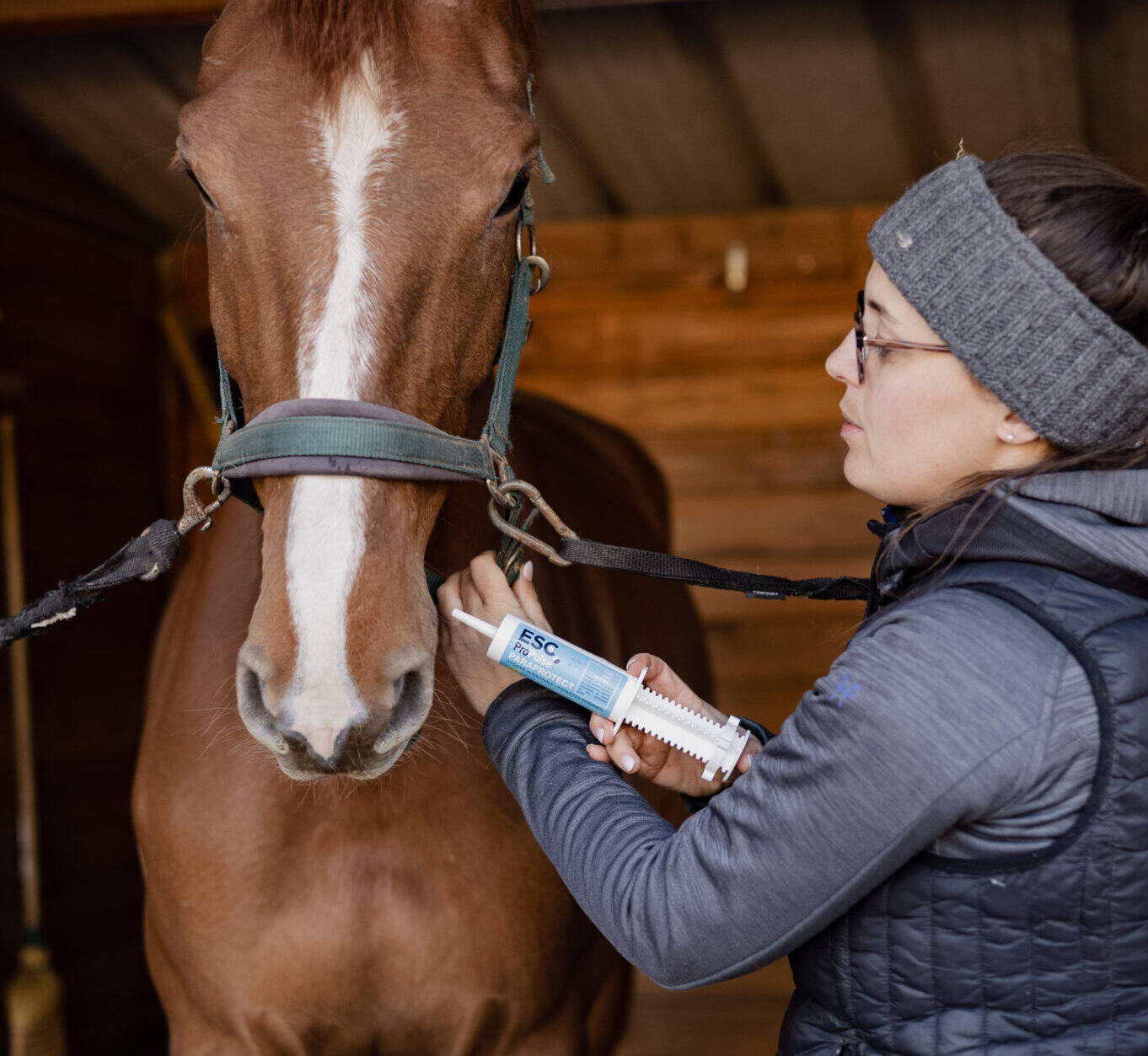
Systematic vermifugation every 3 months is a practice inherited from the 1970s-1980s that is now becoming counterproductive. It accelerates the appearance of parasitic resistance, treats unnecessarily 80% of horses not in need and compromises the future effectiveness of available molecules. A reasoned approach, based on individual observation and analysis, is now recommended by veterinarians.
Introduction
Four vermifugations per year, on fixed dates, for all horses in the stable: this is a reflex well anchored by the equine owners. Yet, in recent years, a new discourse has emerged in the veterinary community. This systematic protocol, long regarded as a universal truth, would be not only unnecessary in most cases, but potentially dangerous for the future of our horses.
How can such a widespread practice be questioned? Indeed, blind vermifugation accelerates a worrying phenomenon : The appearance of parasites resistant to available molecules. So what should we do instead? This article disassembles the ideas received and proposes a clear and current vision of what a suitable vermifugation should be.
Why is the rule of four vermifugations a year obsolete?
To understand why this protocol is so deeply rooted, we must return to the 1970s and 1980s. At that time, equine farms faced significant mortality related to large strongles (Strongylus vulgaris, Strongylus edentatus, Strongylus equinus). These parasites, fearlessly pathogenic, caused severe colic, internal haemorrhage and lameness by larval migration into mesenteric arteries. The situation was critical.
The arrival on the market of new anthelminthic molecules (especially avermectins (ivermectin)) represented a revolution. These vermifuges have shown spectacular effectiveness against the big strongles. The recommendation of the laboratories and veterinarians of the time was simple and pragmatic: defrost all horses, systematicallyThree to four times a year.
This strategy has worked: in a few years, the prevalence of the great strongles has fallen drastically, and the associated mortality has almost disappeared.
The problem is that this rule has become an automation transmitted from generation to generationbeyond its original context. Large strongles are now rare in most European farms. The dominant parasites are now small strongles (cyatostomas), whose life cycle and pathogenicity are very different.
However, the protocol of systematic vermifugation of horses has never been reassessed in the light of these new issues. Veterinary practices have evolvede, but the habits of the owners are much slower.
Why systematically defuse his horse becomes counterproductive?
Today, treating all horses at the same pace is no longer a good practice. Three major arguments argue for a reasoned approach to equine vermifugation.
Resistance to equine vermifuges: a danger for your horse
Small strongles (cyatostoms) have developed resistance to the most commonly used molecules. In France, studies conducted by IFCE and ESCCAP show that Benzimidazole resistance is detected in more than 50 % of the farms tested, and that resistance to pyrimidines (pyrantel) is beginning to emerge. Avermectins, although still generally effective, are not sheltered.
The mechanism is simple: every time a horse is given a deworm, selection pressure on the parasites present. Sensitive worms die, worms carrying a genetic mutation of resistance survive, reproduce and transmit this resistance to their offspring. The more often and massively you treat your horses systematically, the faster you speed up this selection. Treating a horse that does not need deworming amounts to unnecessarily exposing parasites to the molecule, without benefit to the animal, but with an increased risk that it will develop resistance.
The consequence is serious: in a few years we may find ourselves against parasites resistant to all available molecules, without new developing chemical family. Maintaining the effectiveness of our current therapeutic arsenal is therefore a real issue of equine public health.
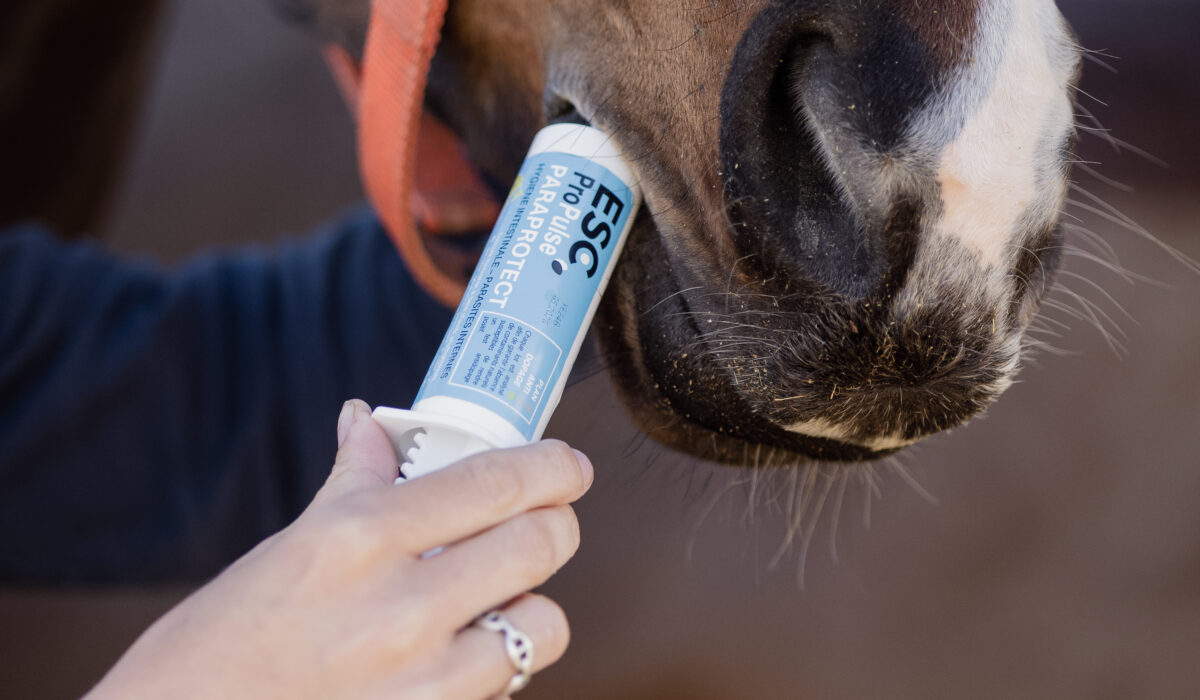
Should his horse be dewormed systematically? The 80/20 rule that nobody explained to you
Here is a little known but fundamental data: in a group of horses, 20% of individuals house 80% of the total parasitic load. This rule, known as the 80/20 or Pareto principle applied to equine parasitism, has been validated by numerous studies in veterinary parasitology.
In practice, this means that in a stable of ten horses, only two of them are strong excretors, i.e. they host a large amount of parasites and massively contaminate the pastures by their crottins. The other eight horses are low excretors They are naturally little parasitic, thanks to improved individual parasitic immunity. These horses simply do not need to be treated so frequently.
Systematic screening of all horses at the same pace returns 80 % to be treated unnecessarily who don't need it. However, treating a healthy horse does not improve its health: it simply exposes the parasites present (even in small quantities) to the molecule, favouring the selection of resistant worms.
One study conducted in 2019 by the team of Professor Martin Nielsen (University of Kentucky) showed that targeted vermifugation (i.e. targeting only high excretors, who contaminate most pasture) reduced the number of annual treatments by 60-70% without increasing the parasitic risk to the group.
Environmental impact often ignored
A less well-known but not negligible argument which would make us answer the negative to the question: Do we have to defrigerate his horse systematically is that the defungants have an impact on the environment, especially the avermectins. Livermectin excreted in crottin after treatment remains active for several weeks and is toxic to coprophage insects, including beetles, beetles and other beetles which play a key role in the decomposition of faeces and the recycling of nutrients in pastures.
The studies in Switzerland and Germany showed that the ivermectin reduced by 50-80% the activity of coprophage insects within a radius of several metres around treated crottins. This disturbance of the pasture ecosystem is not annodine. Less decomposition means accumulation of unrecycled organic matter, uneven soil enrichment, and reduced biodiversity. This is one more argument for defusing a horse only when it is really necessary.
So, when do you really want to defuse your horse?
If systematic vermifugation of horses is no longer recommended, in what cases is it still indispensable? Here are the situations where treatment is not discussed.
Cases where vermifugation remains non-negotiable
Situation | Why is it non-negotiable |
Poulin from 0 to 3 years | Immunity immature, high risk of ascaris infestation (Parascaris equorum), which can cause intestinal obstruction and growth delays. Young horses require a systematic vermifugation protocol with 3-4 treatments per year. |
Juice in the 24h post-partum | Parasitic excretion peak immediately after calving. Deficiency of the mare limits the early contamination of the foal, particularly by the Strongyloides westeri. |
Horse arriving from an unknown farm | Unknown parasitic status, may contaminate the rest of the herd with potentially resistant parasites. Vermifugation of the systematic horse at the entrance, followed by about forty from 48 to 72 hours before integration into the group. |
Autumn (November) | Chemical vermifuge remains an essential ingredient for 100% of the stable. This is the only treatment « blind » It targets Gasterophiles and Tenia, two parasites that are badly detected by classical coproscopy. |
Spring (March-April) | With management of enkystated larvae probably during winter. Depending on the history of the horse and the pressure of the rearing, a winter exit treatment may be recommended by the veterinarian to remove small strongles that wake up after winter. |
Marc's advice: Coproscopy is a revolutionary tool for targeting strongles, but it has its limits. It does not allow to visualize the larvae in dormancy (enkystées) or to count precisely the tenia eggs (ejected intermittently). That's why a reasoned protocol does not mean « zero vermifuge », but rather a strategic follow-up: we analyze all year round, and we keep a systematic safety treatment in the fall to protect the horse from the risks invisible to the analysis.
When to defuse an adult horse in the meadow: a veterinarian's response
For an adult horse living in meadow or paddock, the answer to the question « How often should it be dewormed? » is simple: it depends on its individual parasitic status. And this status, you can't guess with the naked eye.
A horse can look in full shape (good general condition, shiny hair, good appetite) and host a large parasitic load. Conversely, a horse in medium condition can be perfectly parasitic. The appearance of your horse is not enough to decide. The correct protocol depends on the number of eggs of parasites excreted in the crottins, a data that can only be obtained by analysis.
The only way to know if your horse needs treatment is to analyze its crottins. We explain how in our full guide on equine coproscopy. Also think about natural plants for intestinal hygiene your horse (which complement but do not replace chemical deworming).
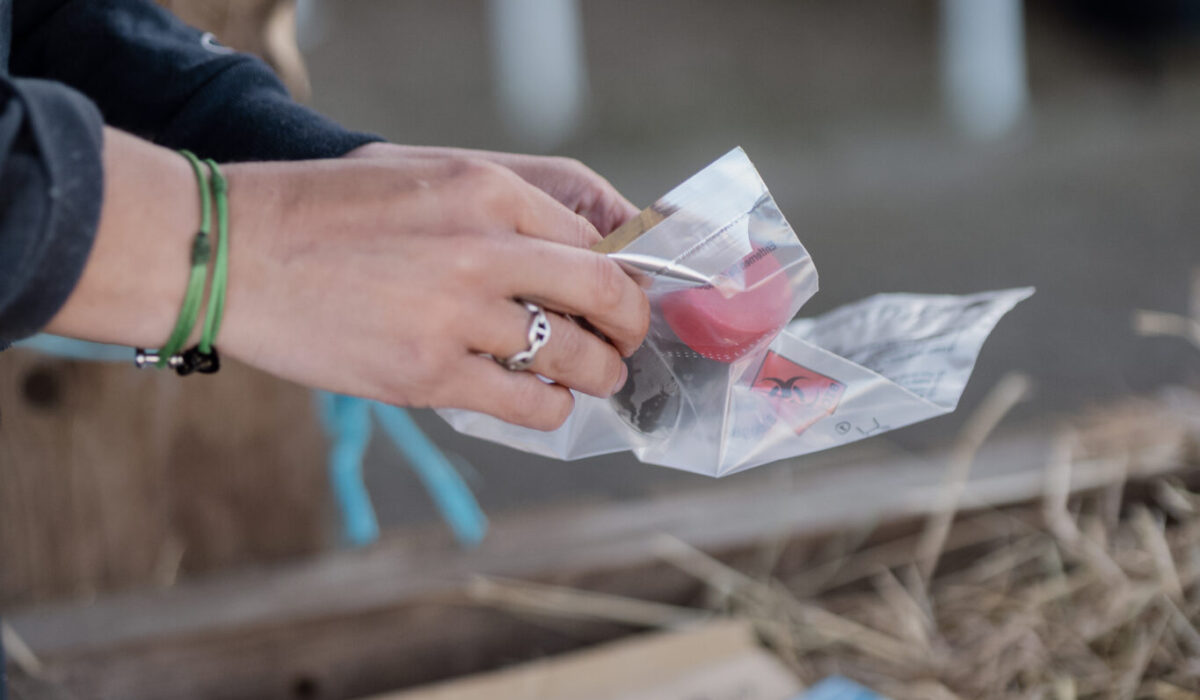
Horse vermifugation: what you can do now without analysis
While waiting for coproscopic monitoring, these are the best practices to be adopted immediately to preserve the effectiveness of deworming and limit parasitic pressure.
Note: These recommendations are validated by the current veterinary protocols.
- Vermifugation protocol: the rotation of molecules. Never reuse the same chemical family twice in a row. Alternate between benzimidazoles (febantel, fenbendazole), macrolides (ivermectin, moxidectin), and pyrimidines (pyrantel). This rotation slows the appearance of cross-resistances.
- Management of pasture : Regular gathering of crottins (ideally twice a week) drastically reduces the contamination of grass by parasite larvae. The rotation of paddocks every 3 weeks, or depending on the height of grass, breaks the reinfestation cycle. Avoid overgrazing: maintain a load of 1 to 2 horses per hectare limits parasitic pressure.
- Forty Newcomers : any horse entering the stable must be systematically vermifuged upon arrival and then isolated for 48 to 72 hours before being put in contact with the other horses. This delay allows the vermifuge to act and prevents excreted parasites from contaminate common pasture immediately.
- Wait 48 hours after treatment before return to meadow After vermifugation, the dead parasites are excreted in the crottins for 24 to 48 hours. Leaving the horse in box during this period limits the direct contamination of pastures. If this is not possible, scrupulously collect the first post-treatment crottins.
Conclusion
Systematic screening every 3 months is not a fault, but it is an outdated practice. The issue today is no longer to deal with often, but to treat at the right time, with the right molecule and on the right horses. This reasoned approach protects your horse, preserves the efficacy of molecules available for the future and avoids unnecessary treatments.
Next step : discover The usefulness of coproscopy to know exactly when your horse needs treatment
Are you ready to go through the analysis? Analyze your horse's crottins
FAQ: Frequently asked questions about horse vermifugation
How often should an adult horse be dewormed?
There is no universal answer. The number of treatments per year depends on the individual parasitic status of the horse, determined by coproscopic analysis. In practice, most adult horses require 1-2 treatments per year: systematic treatment in the fall (against tenias and gastrophils), supplemented by treatment in the spring or summer only if coproscopy reveals a high parasitic load.
Can we defuse a horse without veterinary advice?
Vermifuges are over-the-counter, but without knowing the actual parasitic load of the horse, the risk is to treat unnecessarily or with the wrong molecule. Veterinary accompaniment remains strongly recommended to establish an appropriate protocol, choose the appropriate molecules, and avoid sub-dosages.
My horse looks healthy. Does he really need to be vermifuged?
Not necessarily. A heavily parasitized horse may have no visible signs for a long time. Conversely, a horse in good body condition can host a very low parasitic load that does not require any treatment. The appearance is not enough to decide, the only reliable means is coproscopic analysis.
Can we defuse a pregnant mare?
Yes, but the choice of the molecule is crucial. Some vermifuges are contraindicated during pregnancy, especially in the first third. Veterinary consultation is essential in this case to select a safe molecule and adapt the protocol to the physiological state of the mare.
Should a delay be observed between two vermifugations?
Yes. A minimum of 6 to 8 weeks is recommended between treatments. Too often, the horse will become resistant to pests without bringing any additional benefit to the horse. The life cycle of parasites should be taken into account to optimize treatment efficiency