
Clay for the horse is an essential natural care for the comfort of tendons, joints and skin.
Rich in minerals and trace elements, it helps to soothe the areas requested after the effort, improve blood circulation and limit congestion. Depending on its colour, green, red or yellow, each clay has its own properties: decongestant, absorbent or purifying. Discover our selection of horse clays, chosen for their purity and efficiency.
-
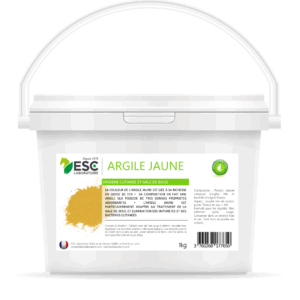
YELLOW CLAY – Skin care in wet conditions
- 27,30 € TTC
- The yellow colour of the clay is linked to its natural iron oxide content. Its composition gives it strong absorbent properties. Yellow clay helps absorb impurities and is particularly suitable for skin care routines in wet conditions. 1 kg bucket.
- Add to cart
-
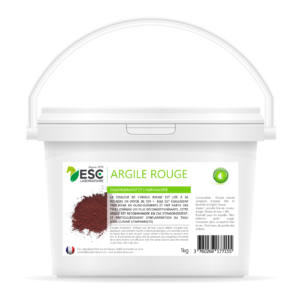
RED CLAY – Circulation and decongestion
- 27,30 € TTC
- The color of red clay is related to its iron oxide richness. It is also very rich in trace elements and is one of the most decongesting types of clays. It is recognized for supporting the bloodstream and its purifying action. Bucket 1 kg
- Add to cart
-
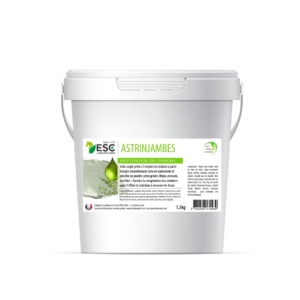
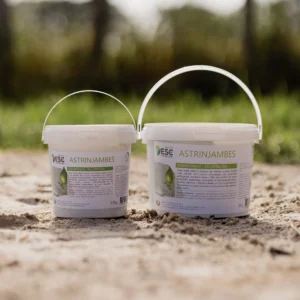
ASTRINJAMBES – Clay enriched with essential oils – Recovery and congestion tendons
- Price range: 24,60 € at 53.30 €
- This ready-to-use horse clay is made from green clay extracted from the volcanoes of Auvergne, with exceptional astringent properties. It is enriched with soothing, draining and cooling essential oils (thym, rosemary, mint). Recommended in case of congestion, trauma or to promote recovery of horse tendons after exercise. Bucket 1.3kg and 3kg
- Choice of options
-
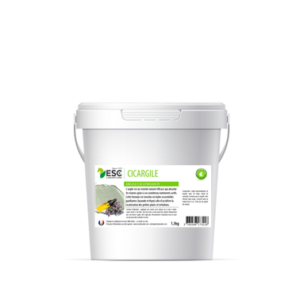
CICARGILE – External purifying clay for horse – Promotes natural regeneration of the epidermis
- 26,60 € TTC
- Ready-to-use natural treatment based on sanitizing and drying green clay enriched with purifying essential oils. Recommended to promote natural skin regeneration. Formula developed and produced by ESC Laboratory Seal 1.3kg
- Add to cart
-
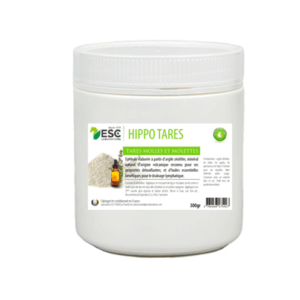
HIPPO TARES – Clay-based purifying care – soft swellings and windgalls
- 31,80 € TTC
- Formula developed from volcanic clay known for its detoxifying properties and essential oils beneficial for drainage. New Formula. Product developed by ESC Pot Laboratory 300g
- Add to cart
-
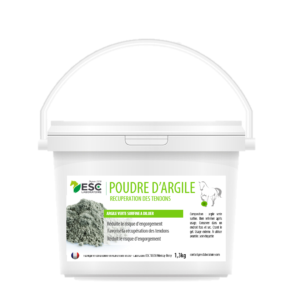
GREEN DARGILE POWDER – To be reconstructed – Horse tendons recovery
- Price range : 13,40 € at 46.60 €
- This green clay powder tightens the tissues and helps reduce congestion in horses. It comes from deposits in the Auvergne Volcano region. This provenance guarantees exceptional qualities to this nutrient-rich product. Seals 1 kg and 4 kg
- Choice of options
-
- Out of stock
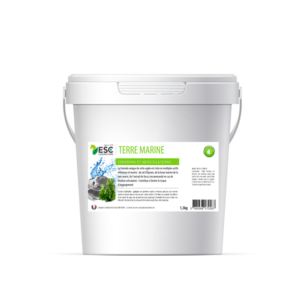
MARINE LAND – Horse clay enriched with marine minerals – Loan for employment
- 50,90 € TTC
- The unique formula of this ready-to-use clay is rich in many mineral and marine active ingredients: Epsom salt, sea mud from the dead sea, fucus extract. It contributes to relaxation and muscle recovery after effort. Exclusive formula developed and conditioned by ESC Laboratory. Bucket 3kg
- Read more
-




Choose your horse clay well
Not all clays are of equal value and do not have the same properties, and choice depends primarily on the need of your horse.
Green clay is the most versatile. Known for its strong absorbent and purifying properties, it is suitable for the common care of tendons and joints, especially after intense effort or competition. This is the reference clay for regular preventive use.
Red clay is distinguished by its richness in iron oxide and trace elements. It is the most decongestant clay, especially recommended in case of congestion of limbs or lymphangitis. Its astringent power helps boost blood circulation in congested areas.
Yellow clay, also rich in iron oxide, stands out for its absorbent properties adapted to skin disorders in a humid environment. It promotes the removal of impurities and is well suited for skin hygiene care, in addition to a horse living in the meadow or in wet box.
How to apply clay on a horse
The clay is usually prepared in cataplasm: mixed with cold water until it obtains a homogeneous paste, it applies directly to the area to be treated, previously cooled limbs. It can be left to dry in the open air and then rinsed, or covered with a bandage to prolong its action. The application is done ideally after the effort or at the end of the day, outside of the work periods.
It is recommended not to apply clay on an open wound without veterinary advice, and to always use a superfine clay, guaranteed without residues, for safe skin contact.
Argile and congestion: a preventive gesture
Horses at rest, in box, or with little mobilization are particularly prone to limb congestion. The regular application of red clay, combined with good hygiene of life (exit in the meadow, walking in hand), helps to limit these phenomena. For a targeted treatment on congestion and lymphangitis, also discover our range dedicated to the movement and recovery of members.
Our clays at ESC Laboratory
At ESC Laboratory, our clays are selected for their purity and packed in ready-to-use buckets. Find our Clay powder and our best seller Astrinjambes, which combines clay and essential oils for a reinforced decongestant effect. For internal use, also discover our food clay for horse digestion.
Find our article to find out how to use clay for horses.
FAQ Horse Clay
Which clay to choose for a horse: green, red or yellow?
Green clay is suitable for the common care of tendons and joints, especially in prevention after effort. The red clay, richer in iron oxide, is recommended in case of congestion or lymphangitis due to its decongesting effect. Yellow clay is suitable for skin disorders in a humid environment, such as horses living in a meadow or in a wet box.
How to apply clay on the members of a horse?
The clay mixes with cold water until it obtains a homogeneous paste, then applies in cataplasm on previously cooled limbs. Pass a first layer in the opposite direction of the hairs to reach the skin well, then a new layer in the direction of the hair. It can dry in the open air or be kept in bandage to prolong its action, usually at the end of the day or after the exercise.
Is clay effective against congestion and lymphangitis?
Yes, red clay is particularly indicated in this case thanks to its astringent power that stimulates blood circulation. It is often used in addition to regular physical activity and good hygiene to limit the recurrence of congestion.
How long do you leave clay on a horse?
The laying time varies according to the desired objective, usually between 30 minutes and several hours, or even a whole night under bandage for a reinforced decongestant effect. It is advisable to monitor the skin reaction of the horse, especially during the first applications.
Can clay be used for prevention, even without injury?
Yes, green clay is commonly used for prevention in horses subjected to regular work or competition, in order to maintain the flexibility of tendons and limit inflammation before it settles.
Can clay be applied to a wound?
Clay should not be applied directly to an open wound without prior veterinary advice, as it may interfere with natural healing. However, it is suitable for preventive care and healthy skin areas.