Care of the horse's tendons: protect and relieve its limbs
The members of the horse are subjected to intense mechanical stresses, whether in training, competition or during outdoor trips. Tendons, in particular, are fragile structures that require constant attention. Bringing horse tendon care Regularly is essential to prevent injuries (tentinitis, moles) and promote rapid tissue recovery after exercise.
-
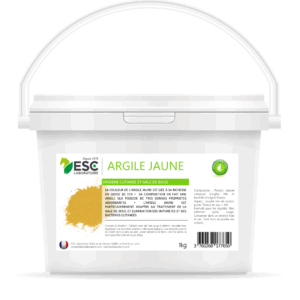
YELLOW CLAY – Skin care in wet conditions
- 27,30 € TTC
- The yellow colour of the clay is linked to its natural iron oxide content. Its composition gives it strong absorbent properties. Yellow clay helps absorb impurities and is particularly suitable for skin care routines in wet conditions. 1 kg bucket.
- Add to cart
-
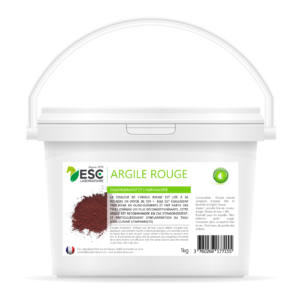
RED CLAY – Circulation and decongestion
- 27,30 € TTC
- The color of red clay is related to its iron oxide richness. It is also very rich in trace elements and is one of the most decongesting types of clays. It is recognized for supporting the bloodstream and its purifying action. Bucket 1 kg
- Add to cart
-
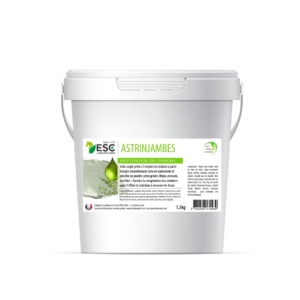
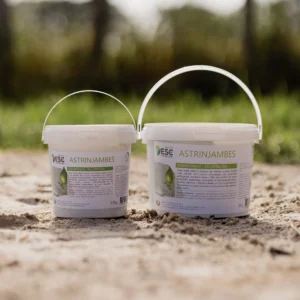
ASTRINJAMBES – Clay enriched with essential oils – Recovery and congestion tendons
- Price range: 24,60 € at 53.30 €
- This ready-to-use horse clay is made from green clay extracted from the volcanoes of Auvergne, with exceptional astringent properties. It is enriched with soothing, draining and cooling essential oils (thym, rosemary, mint). Recommended in case of congestion, trauma or to promote recovery of horse tendons after exercise. Bucket 1.3kg and 3kg
- Choice of options
-
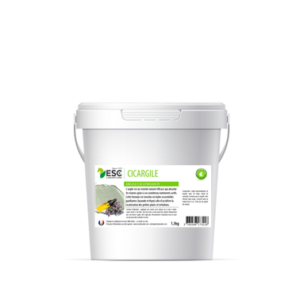
CICARGILE – External purifying clay for horse – Promotes natural regeneration of the epidermis
- 26,60 € TTC
- Ready-to-use natural treatment based on sanitizing and drying green clay enriched with purifying essential oils. Recommended to promote natural skin regeneration. Formula developed and produced by ESC Laboratory Seal 1.3kg
- Add to cart
-
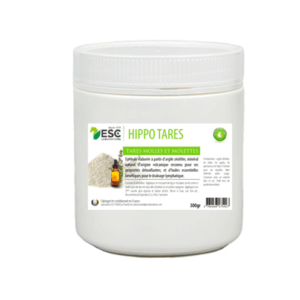
HIPPO TARES – Clay-based purifying care – soft swellings and windgalls
- 31,80 € TTC
- Formula developed from volcanic clay known for its detoxifying properties and essential oils beneficial for drainage. New Formula. Product developed by ESC Pot Laboratory 300g
- Add to cart
-
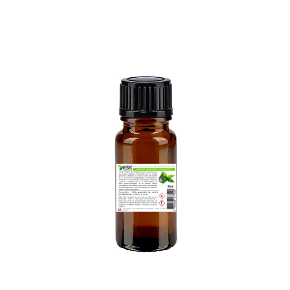
POIVRATED MENTH ESSENTIAL OIL – Digestion respiration and horse joints
- 5,60 € TTC
- Peppermint essential oil (Mentha arvensis) Bottle 10ml
- Add to cart
-
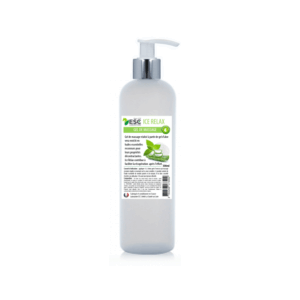
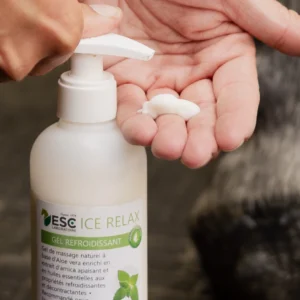
ICE RELAX – Arnica + mint – Cooling horse gel
- 21,30 € TTC
- Ice Relax is a natural massage gel based on Aloe vera enriched with soothing d Recommended to promote tendon recovery after stress. Product developed and manufactured by our laboratory. 300ml bottle with dosing pump
- Add to cart
-
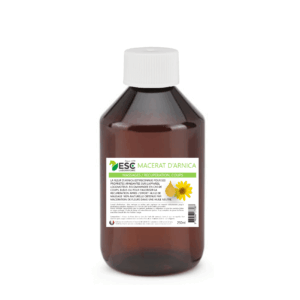
MACERAT DARNICA – Massages and horse recovery
- 18,80 € TTC
- 100% natural massage oil obtained by maceration of flowers in neutral oil. Recommended in case of blows or to promote recovery after effort. The arnica flower is known for its soothing properties on the locomotor system. Bottle 250ml
- Add to cart
-
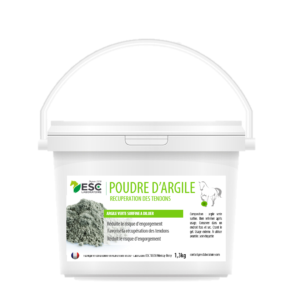
GREEN DARGILE POWDER – To be reconstructed – Horse tendons recovery
- Price range : 13,40 € at 46.60 €
- This green clay powder tightens the tissues and helps reduce congestion in horses. It comes from deposits in the Auvergne Volcano region. This provenance guarantees exceptional qualities to this nutrient-rich product. Seals 1 kg and 4 kg
- Choice of options
-
- Out of stock
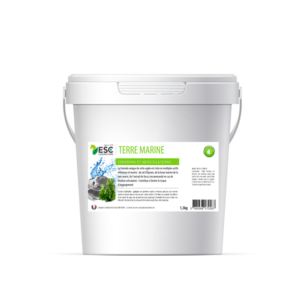
MARINE LAND – Horse clay enriched with marine minerals – Loan for employment
- 50,90 € TTC
- The unique formula of this ready-to-use clay is rich in many mineral and marine active ingredients: Epsom salt, sea mud from the dead sea, fucus extract. It contributes to relaxation and muscle recovery after effort. Exclusive formula developed and conditioned by ESC Laboratory. Bucket 3kg
- Read more
-
-
TRAUMAPHYT – L-arnica gel for tendons
- 21,30 € TTC
- Arnica gel for horse tendons enriched with essential oils recognized for their circulatory and soothing properties. Traumaphyt helps to facilitate the recovery of tendons after stress. Bottle 300ml
- Add to cart



Why care for your horse's tendons?
The tendinous system has a slow regeneration capacity because it is not vasculized. The application of external tendon care allows to act directly on the requested area to:
– Cool fabrics: reduce internal heat after intense effort to avoid inflammation.
– Drain the congestion: promote lymphatic circulation to recover dry and healthy limbs.
– Squeeze the fabrics: tone the tendinous fibers with astringent actives.
– Sooth pain: immediately relieve sensitive limbs thanks to the benefits of herbal therapy.
Our tendon care solutions: clays, gels and liniments
At ESC Laboratory, we designed a range of technical care adapted to each stage of the equine athlete's life:
Horse clay: the reference treatment
The application of a clay cataplasm (riched with essential or pure oils) remains the tendon care the most effective to eliminate toxins and tighten tissues thanks to its exceptional adsorption power.
Massage gels and liniments
For quick action, our massage gels make it possible to prepare the tendons before the exercise (heating effect) or to relax them immediately after (cold effect). The liniment like Hippotares, on the other hand, is the tendon care ideal for deep massage to stimulate microcirculation.
Natural plant care
We prefer natural ingredients such as Arnica, Calendula or Rosemary, known for their anti-inflammatory and soothing properties, guaranteeing total respect for your horse's skin.
Our advice: the post-effort routine
To maximize the effectiveness of your tendon care, we recommend a three-step routine:
1/ Shower the limbs cold water rising from the ball to the knee.
2/ Apply a cold gel or clay on still wet tendons.
3/ Allow (in film or in open air depending on the product) for optimal penetration of the assets.
Did you know that? A heating tendon is the first warning sign. Preventive care can often avoid a period of forced rest.
Find our complete article on the protection of horse tendons.