Skin outgrowths such as warts or sarcoids, are relatively frequent in the horse, especially in the young horse, where they often regress alone in a few months.
Some lesions change differently and deserve special attention.
At ESC Laboratory, we offer natural external treatments, based on plants and essential oils, to accompany the skin on a daily basis.
-
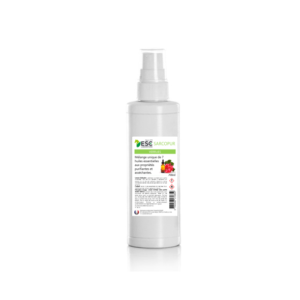
SARCOPUR – Horse skin growth – External care enriched with essential oils
- 30,80 € TTC
- Sarcopur is a lotion that contains a unique blend of 7 essential oils with purifying and drying properties. Exclusive formulation developed by our Laboratory Flacon 200ml with spray stopper
- Add to cart
-
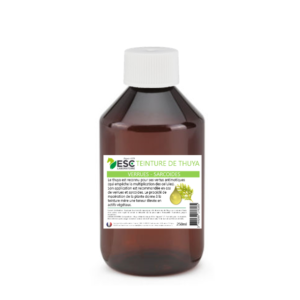
THUYA KEEPING – Horse skin growth
- 25,90 € TTC
- Thiya, rich in essential oil (mainly thuyone), is the reference plant in case of skin growth. The maceration process of the plant gives our mother dye a high level of plant actives. Bottle 250ml
- Add to cart

Different types of skin growth: what to pay attention to
Some skin growths are viral, contagious and usually benign. They mainly affect the young horse, on the nose or lips, and usually regress alone in a few months, once the virus is eliminated by the immune system.
Other lesions resemble them but evolve differently, and rarely regress spontaneously. The distinction is not always obvious to the naked eye. In case of doubt, or if an outgrowth grows, changes in appearance or does not decline, the opinion of a veterinarian remains indispensable.
Why prefer external care?
A treatment applied directly to the lesion complements the support provided from the inside. Our lotions and mother dyes are formulated to purify and sanitize the area concerned, in local use. To support the immune system from within, our plant range is complementary to these external care.
How to use these natural treatments?
Sarcopur, a mixture of 7 essential oils, applies once a day for three weeks, then two to three times a week in maintenance. Thiya dye, obtained by maceration of the plant, is also used in direct local application on the lesion. These treatments accompany the skin on a daily basis, in addition to monitoring the progression of the lesion.
Frequently Asked Questions
How to recognize benign skin excrescence in horses?
Viral outgrowth usually declines alone in a few months, especially in young horses, while a more persistent lesion may evolve over time. Both may have a close look. In case of doubt, or if the lesion grows or changes its appearance, a veterinarian's opinion confirms the diagnosis.
Are the skin growths of the horse contagious?
Viral outgrowths are contagious through direct contact, especially between young horses. Other lesions are not considered contagious between horses, even when a virus is involved in their appearance.
How long does a local treatment last?
An external treatment such as Sarcopur usually uses once a day for three weeks, then in maintenance two to three times a week. Duration may vary depending on the situation and location of the injury.
Should a veterinarian be consulted for skin growth?
A veterinary examination is recommended in case of doubt as to the nature of the lesion, if it grows, changes appearance, or does not regress after several months. Only a veterinarian can make a diagnosis of certainty.