The sarcoid is the most common skin tumor in horses, accounting for nearly 20% of the tumours observed in equine species. Generally benign, it does not endanger the life of the animal, but it can re-offend and become more aggressive if it is poorly managed. In this guide, we help you identify different types of sarcoid, to understand their causes, and to discover the natural solutions ESC Laboratory to accompany your horse, complement or alternative to veterinary treatments.
What is a sarcoid in the horse?
The sarcoid is a benign skin tumor that affects the horse: it does not metastase, unlike cancer, but it is locally aggressive and tends to recur. It comes from cells called fibroblasts, normally involved in healing, which explains why treatments that stimulate scar tissue can worsen the lesion.
It is often confused with a simple wart: unlike the papilloma, which disappears spontaneously in a few months in the young horse, the sarcoid almost never recedes alone and can infiltrate into the surrounding tissues. A viral factor, bovine papillomavirus, is now recognized as a probable trigger in horses Genetically predisposed.
The 6 types of sarcoid: how to recognize them?
There is Six forms of sarcoid in the horse, differentiated by their appearance and location. They can appear alone or in clusters, and the same horse can develop several types simultaneously.
Occult sarcoid
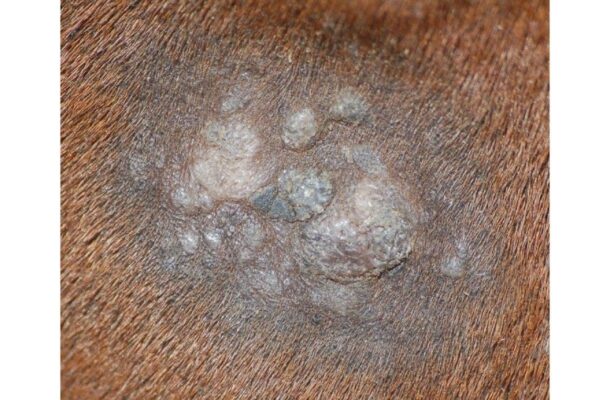
Flat and depilated area, covered with a grey and scaly crust, often circular. Frequently confused with moth. It is found mainly on the head, neck and between the hind legs.
Verruqueous sarcoid
Grey and scaly warts with more irregular contours than the occult type, often with several lesions around the affected area. It can evolve to an occult sarcoid.
Nodular sarcoid
Small bumps under thin and shiny skin, which can exceed 5 cm in diameter. Typical location: ain and eyelids.
Fibroblast sarcoid
Mass fleshy and aggressive, sometimes pedunculated, which can develop rapidly after a skin wound. Often ulcerated and very invasive for the surrounding skin.
Flat sarcoid
Discreet injury, skin simply a little thickened, often discovered late because it goes unnoticed during dressing.
Malignant sarcoid
The rarest and most aggressive form: it spreads through the skin and along the lymphatic vessels, with cords of tumour tissue interspersed with nodules and ulcerous lesions. The tumour is then larger and can cause real discomfort or even pain. Veterinary monitoring is essential.
Causes and risk factors of the sarcoid
The horse sarcoid usually develops at the location of an old insect wound, scar or sting, especially in areas of fine skin. Two main factors are now identified: papillomavirus bovine, transmitted by direct contact with cattle or indirectly via an already carrying horse or an insect bite, and genetic predisposition. Some breeds seem more sensitive, including the Quarter Horses, Appaloosas and Arab horses.
Is the sarcoid contagious?
The sarcoid is not contagious in the strict sense of the term. However, the sarcoid may be transmissible if the horse is carrying the predisposition gene: the bovine papillomavirus, carried by contact with cattle, with a horse already affected, or by picker insects acting as vectors, can then trigger the tumour. A healthy horse, without this genetic predisposition, will not develop a sarcoid simply in contact with an affected animal.
When do you need to consult a veterinarian for a sarcoid?
A stable, small, non-inconvenient sarcoid can be simply monitored. On the other hand, veterinary consultation is required if you see any of the following signs:
- rapid or sudden mass growth,
- ulceration,
- bleeding,
- or location in a sensitive area (eye, sheath, strap passage, or zone of friction of the harness).
The veterinarian can confirm the diagnosis by puncture or biopsy and determine the type of sarcoid in the presence. Remember that early treatment is always more effective than late intervention on an already large tumour.
Conventional sarcoid treatments in horses
There is no miracle cure for the sarcoid, and the risk of recurrence remains high regardless of the method chosen. The most suitable treatment depends on the position, size and number of tumours.
- Surgical discharge: performed under local or general anesthesia, it must be large to remove as many tumour cells as possible, but failure rate remains high and healing sometimes difficult.
- Ligature: a tight band is placed at the base of the tumor; It is possible only on a pedunculated sarcoid and can be painful.
- Cryotherapy: the tumor is frozen and then destroyed, at the cost of long, repeated treatment, often under general anaesthesia.
- Immunotherapy: injection of substances stimulating the immune system, effective especially near the eye, but requiring several sedation sessions.
- Radiotherapy: efficient but expensive treatment, reserved for a few specialized centres due to its technical complexity.
- Laser removal: a surgical laser removes the tumor and a healthy tissue margin to limit the risk of recurrence.
Natural Sarcoid Treatment: Internal and External Approach
Since these conventional treatments are often expensive and invasive, many owners turn to natural management, especially when the sarcoid is taken at an early stage.
Based on our field experience at ESC Laboratoire, equine herbal therapy gives the best results when it combines local topical action and internal immune support, in parallel with or without veterinary treatment.
Natural Topical Care: Sarcopurs and Tincture of Thuya
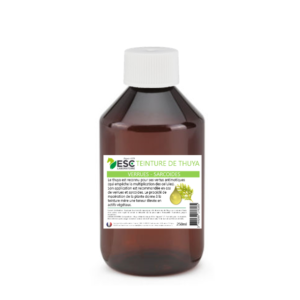
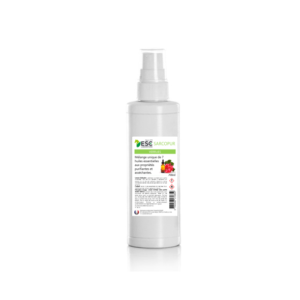
In local application, our care SARCOPUR, our care based on he combines essential oils selected to dry and remove sarcoids from equine epidermis. The tincture mother of thuya is a popular alternative when the horse is too sensitive to pure essential oils: the maceration process of the plant gives it a high level of plant actives with antiviral and keratolytic properties, traditionally used against warts and skin conditions such as fungus or psoriasis. In practice, dyeing applies daily using a compress directly on the lesion until visible disappearance.
Supporting horse immunity: the internal shutter
The role of herbal therapy is not limited to local action: it also aims at stimulate horse immunity to help fight tumour cells. Several plants are traditionally used in addition:
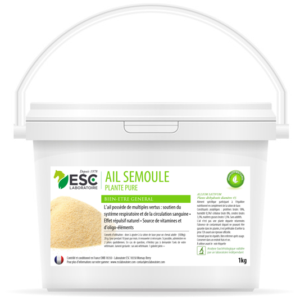
- Garlic (Allium sativum): 15 to 20 g per day in the ration for its allicin and its recognized preventive effect on abnormal cell promotion. Caution: garlic reduces blood clotting and should be stopped several days before any surgery.
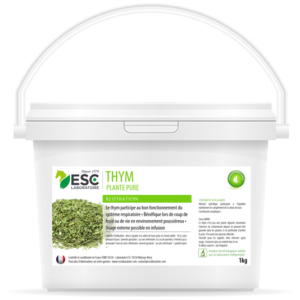
- Thyme (Thymus vulgaris): 50 g infusion in 1 to 2 litres of water, morning and evening, for its antioxidant action and its immunostimulating role.
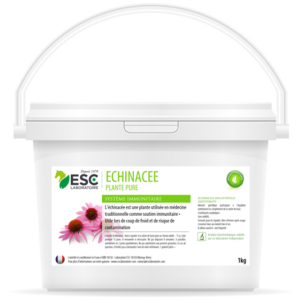
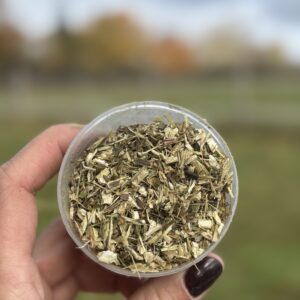
- Echinacea angustifolia: Traditionally used to support and stimulate the horse's immune defenses.
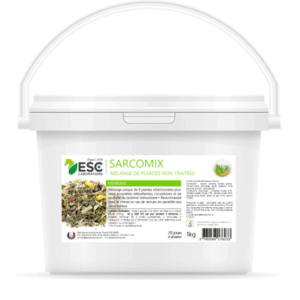
- Sarcomix, mixed plants : our specific synergy designed to accompany the horse throughout the duration of the treatment, in cures from 3 weeks to 3 months depending on the case.
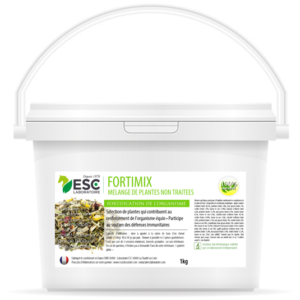
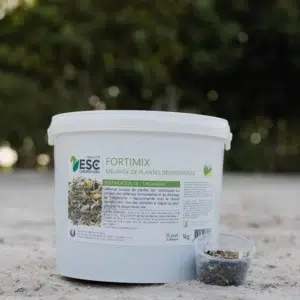
- Fortimix : A mixture of 9 plants (marine algae, bardane, thistle-marry, chicory, cynorrhodon, echinacea, gaillet-gatteron, ginkgo biloba, nettle) which contributes to the development of immune defenses and drainage of the organism.
How to combine the two approaches: standard protocol by ESC Laboratory
The most effective protocol combines the daily application of topical care (Sarcopurs or thuya dye) with an internal treatment of immunostimulating plants (Sarcomix, Fortimix, or pure plants) on a 3 weeks to 3 months depending on the size and evolution of the tumour.
Whatever option is chosen, it is essential to continue treatment until a visible result is achieved: premature cessation is at high risk of recurrence, sometimes with a more serious injury than the previous one.
Prevent the onset or recurrence of the sarcoid
To reduce the risk of sarcoid, protect and monitor wounds and scars, which are suitable for the installation of bovine papillomavirus. Good control of picker insects, potential vectors of the disease, also reduces the risk of transmission.
Finally, a regular strengthening of your horse's immunity, via a preventive plant cure, can help to limit recurrence in horses already affected or genetically predisposed. Regular monitoring of any skin mass remains the best reflex: if it does not grow, it is generally not worrying; as soon as it evolves, direction the veterinarian.
Frequently asked questions about the horse sarcoid (FAQ)
Is the sarcoid contagious in the horse?
The sarcoid is not contagious in the classical sense of the term. However, if the horse carries genetic predisposition, the bovine papillomavirus (transmitted by contact with cattle or via picker insects) may trigger the appearance of a sarcoid. A healthy horse without this predisposition will not develop disease in contact with an affected horse.
How do I recognize a sarcoid in the horse?
A sarcoid occurs in the form of a variable skin injury: a depilated and squamous area (occult sarcoid), a greyish wart (verrucose), a bump under the skin (nodular) or a fleshy ulcer (fibroblastic) mass. It is found mainly on the head, limbs, abdomen and around the eyes. It usually does not regress alone.
Can we sell a horse with a sarcoid?
Yes, the sale of a horse carrying sarcoids is legal, but the seller must inform the buyer. An undeclared sarcoid can be a hidden defect. The location and scalability of the tumour are crucial to the evaluation of the horse.
Does the sarcoid disappear on its own?
Very rarely. The vast majority of sarcoids do not regress spontaneously and tend to grow over time. Some occult sarcoids may remain stable for years, but any clumsy intervention may make them more aggressive. Veterinary monitoring is recommended.
What difference between a sarcoid and a wart in the horse?
A wart (papiloma) is caused by an equine papillomavirus, especially affects young horses and disappears spontaneously within a few months. The sarcoid is a fibroblastic tumor associated with bovine papillomavirus, does not disappear alone, tends to recur and can become aggressive. Both may look like an early stage, hence the importance of veterinary diagnosis.
When should we call the vet for a sarcoid?
Consult a veterinarian if the sarcoid quickly grows, ulcers, bleeds or is located in a sensitive area (eye, shroud, strapping). A small, stable sarcoid can be monitored at home with local natural treatment. In case of doubt, it is better to consult early because treatment at an early stage is always more effective.
Sources:
- Thesis Therapeutic support of the athlete horse by the pharmacist officin in herbal therapy, aromateria and homeopathyby Mathilde Hepp
- Status of knowledge of equine sarcoids — Bibliographic and retrospective study, Vetagro Sup — French university thesis, good academic basis citable.
- Bovine Papillomavirus Type 13 DNA in Equine Sarcoids, PMC — international scientific study on the viral strains involved.
Find our useful products in the fight against horse sarcoids.
-
Best Seller
- -10%
FORTIMIX – Horse immune defenses – Mixture of plants
-
42,50 €The initial price was: 42.50 €.38,24 €The current price is: 38.24 €. TTC - Add to cart
-
AIL SEMOULE – General well-being of the horse – Pure plant
- 15,60 € – 62,20 €Price range : 15,60 € 62.20 €
- Choice of options
-
Best Seller