
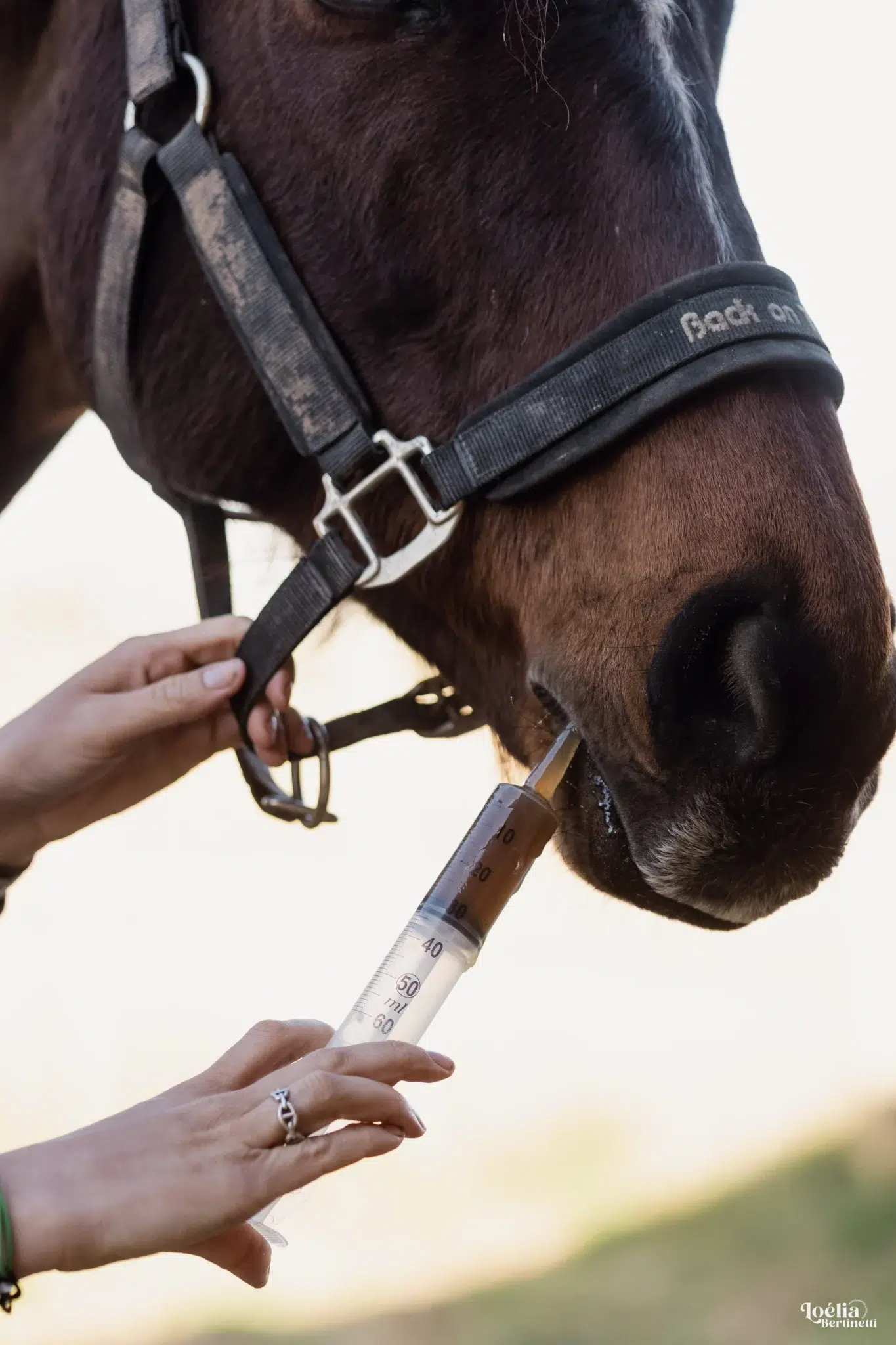
Your horse coughs slightly at the beginning of work? He sneezes in the spring or seems less efficient for no apparent reason? We often think immediately of emphysema. However, all respiratory allergies in the horse do not lead to emphysema, and many owners pass by mild to moderate allergic reactions which, when not supported, can actually worsen over time.
These allergies « silent » (pollinic rhinitis, inflammation of the deep respiratory tract, even allergic headshaking) however, need to be diagnosed and managed before they become chronic. At the end of this article, you will know how to distinguish different types of respiratory allergies of the horse, recognize the allergens involved and above all act concretely on the environment of your animal to preserve its well-being.
What is a respiratory allergy in the horse?
Respiratory allergy is a exaggerated immune system response against an harmless substance present in the environment: pollen, mould spore, dust, acarian. The horse's immune system wrongly identifies this substance as a threat and triggers an inflammatory reaction to the respiratory tract.
In concrete terms, this reaction results in several phenomena:
- expansion of the blood vessels of the respiratory mucosa,
- overproduction of mucus for «trap » Intruder,
- and contracture of the muscles surrounding the bronchi (bronchospasm).
The horse then breathes less well, coughs to evacuate the mucus, and may have a clear nasal flow.
Unlike an infectionno pathogen (virus, bacteria) is involved. The respiratory allergy of the horse is the result of hypersensitivity. The horse reacts to something normally harmless. This distinction is important: an antibiotic or antiviral will not be used against an allergy. Only the management of allergen exposure and the body's support can improve the situation.
Repeating these allergic episodes, without management, can lead to irreversible chronic lesions. Repeated inflammation thickens the bronchi wall, mucus accumulates, bronchi lose their elasticity. It is at this stage that the allergy is tilting towards Equine emphysema (or severe equine asthma), a chronic condition with irreversible lesions.
According to the current nomenclature recommended by equine veterinarians, we distinguish several forms of equine asthma, from mild IAD (inflammatory airway disease) to severe asthma (emphysema). This paper focuses on the mild to moderate forms to be detected as soon as possible.
The horse's main respiratory allergens
An IFCE study on 23 sports horses confirms the diversity of respiratory allergens involved in horses. These are the most common, classified by environment.
Allergens in stables
The stable is a potential allergen concentrate. Paradoxically, it is often inside that the horse is most exposed.
- Mould spores of hay These are the most common stable allergens. Forage, even if it looks good, contains mould spores that release in large quantities when boots are removed. The peak of exposure is at the time of hay distribution, when the horse plunges its nose in and inhales deeply.
- Bacterial endotoxins : present in degraded fodder and litter, they are powerful irritants of the bronchial. They come from the cell wall of gram-negative bacteria that multiply in wet organic matter.
- Straw dust : straw is the most allergenic litter. It produces not only mineral dust, but also fine plant fragments that penetrate deep into the bronchi. White wood chips (the most neutral), hemp or pressed ground straw are preferred for sensitive horses.
- Ammonia This chronic bronchial irritant is formed in poorly ventilated boxes by decomposition of urea in urine. It aggravates existing hypersensitivity and prepares the ground for a more severe allergic reaction.
- The mites They grow in wet litter and stored forage in confined atmosphere. Storage mites (Tyrophagus, Lepidoglyphus) are different from domestic mites, but just as allergenic for the horse.
Seasonal allergens
If your horse gets better in the box, it is often the sign of an allergy to stable dust. But the meadow is not free of allergens, especially in spring and autumn.
- Grass pollen (April to July): it is the first seasonal allergen in horses. The permanent grasslands (a grassy area that has not been ploughed or integrated into crop rotation for at least five years) concentrate several grass species (type, fescue, ray-grass, fleole) that pollinate at slightly shifted times, extending the exposure period. The peak is in May-June.
- Mushroom spores These spores have two annual peaks (a spring peak between April and May and an autumn peak between September and October) related to grassland moisture and plant decomposition. Microscopic fungi (Alternativearia, Cladosporium) release their spores in the air per million.
- The pollens of trees (February to April): Less documented in horses than grass pollen, birch, ash or oak pollen are nevertheless involved in some early spring headshaking cases.
Different forms of respiratory allergy in horses
Not all of the horse's respiratory allergies are the same. Recognizing these distinctions helps to better understand what your horse is experiencing.
Inflammatory Airway Disease (LIAD): mild to moderate shape
IAD is a inflammation of the deep respiratory tract without severe bronchial obstruction. It is the most common form of respiratory allergy, but also the most unknown. The horse seems « Just a little less efficient ».
The signs are discreet: mild cough at the beginning of work (the first 10 minutes), dry nasal discharge (clear and liquid as water), decreased tolerance to exercise, shortness of breath faster. The horse normally recovers at rest and symptoms disappear when stopped, delaying diagnosis.
IAD is reversible if it is taken care of early. This is the form to be detected before it evolves. According to the National Veterinary School of Alfort, IAD affects up to 50% of active sports horses, often subclinically.
Allergic rhinitis
Allergic rhinitis is a inflammation of the nasal mucosa triggered by an inhaled allergen, most often pollen. The signs are more telling: repeated sneezing, clear and abundant nasal discharge, frequent sniffing, nose friction against objects to relieve itself.
It is a respiratory allergy often seasonal: it appears in the spring, thinned in the summer, can resume in autumn depending on pollen. Attention rhinitis is rarely isolated. It is often accompanied by an underlying, less visible bronchial disease.
Headshaking of allergic origin
Headshaking (uncontrollable, sometimes violent, headaches) is a complex syndrome, one of the possible causes of which is pollen allergy. Among the hypotheses studied, some researchers suggest hypersensitivity of the trijumeau nerve to pollen, which would create a feeling of intense irritation. This pathway is not yet scientifically established and headshaking remains a multifactorial syndrome whose diagnosis requires specialized veterinary consultation.
Headshaking often appears in spring, outdoors and worsens in full sun or in dry and windy weather (a climate that maximizes pollen dispersion). It is often confused with a dental or behavioural problem. Still little known, this condition requires specialized veterinary consultation to be properly diagnosed and managed.
How to recognize respiratory allergy?
Signs that must alert you
Some signs, taken in isolation, may seem anodizing. It is their persistence, their seasonal recurrence or their connection to a specific environment that must alert you.
| Observed sign | What it says |
| Light cough at start of work (disappears after heating) | IAD light, bronchial irritation |
| Repeated sneezes, clear nasal flow | Allergic Rhinitis (often pollen) |
| Slight drop in shape at exercise, shortness of breath faster | IAD, mild hypoxia due to partial obstruction of the respiratory tract |
| Repeated head shears in the meadow, especially in spring | Headshaking pollen |
| Breathing slightly accelerated at rest (> 16 breaths/minute) | Early bronchial disease, ongoing inflammation |
Cough is often the first signal of respiratory allergy. Discover our solutions for support the comfort of the horse's respiratory tract.
Horse respiratory allergy: what the veterinarian will seek to confirm
Faced with evocative signs, the veterinarian has several diagnostic tools to confirm allergy and assess its severity.
- Respiratory examination with auscultation : The veterinarian listens to lung noises at rest and after a light effort. Whistling, crumbling, or noisy breathing is directed towards a bronchial disease.
- Respiratory endoscopy : a flexible camera is introduced by the nose to the bronchi. The examination visualises excess mucus, redness of the mucosa, and possible partial obstruction of the respiratory tract.
- Broncho-alveolar lavage (LBA) : physiological serum is injected into the bronchi and then recovered for cell analysis. This technique distinguishes an infectious ADI (presence of neutrophils) from an allergic ADI (presence of eosinophils, cells characteristic of allergy). This is the reference examination.
- Intradermoreaction tests small amounts of allergens are injected under the skin. A local reaction (swelling, redness) identifies the specific allergens to which the horse is sensitized. This test helps to target environmental management and, possibly, to consider desensitisation.
Acting on the environment: the first line of action in case of respiratory allergy of the horse
Environmental management is more effective than any supplement or treatment to control respiratory allergy in horses. Here are the concrete measures that make the difference.
Improving hay quality
- Drain hay 15 to 30 minutes before distribution This simple action reduces mould spores by 90% by preventing them from dispersing into the air. Dive the hay into a clean water pan, let it soak, and drain before distributing it.
- Or go to the groaned hay : very low spore content when well fermented, since hay is preserved by anaerobic fermentation. However, be careful about the digestive transition: introduce the enrubanne gradually over 3 to 4 weeks to avoid the imbalances of the intestinal microbiota.
- Distribute hay at low height (on the ground or in a low net): this prevents the horse from inhaling dust that falls directly into his nose when he eats his head up. Gravity is in your favor.
- Avoid storage of hay directly above boxes : spores and dusts pass through the floor and contaminate the air of the box permanently. Store the hay in a separate, well ventilated room.
Change litter
- Straw is the most allergenic litter → Replace it with dusted white wood chips, hemp or pressed ground straw. Linen and miscanthus are also good alternatives. You can also mix them for more comfort in the horse.
- Sorne the horse from its box during curing and mulching : the mixing of the litter raises a cloud of dust which takes several hours to fall. Never make your horse breathe that dust.
- Let the box dry before entering the horse moisture promotes the proliferation of moulds and mites. A dry box is a healthier box.
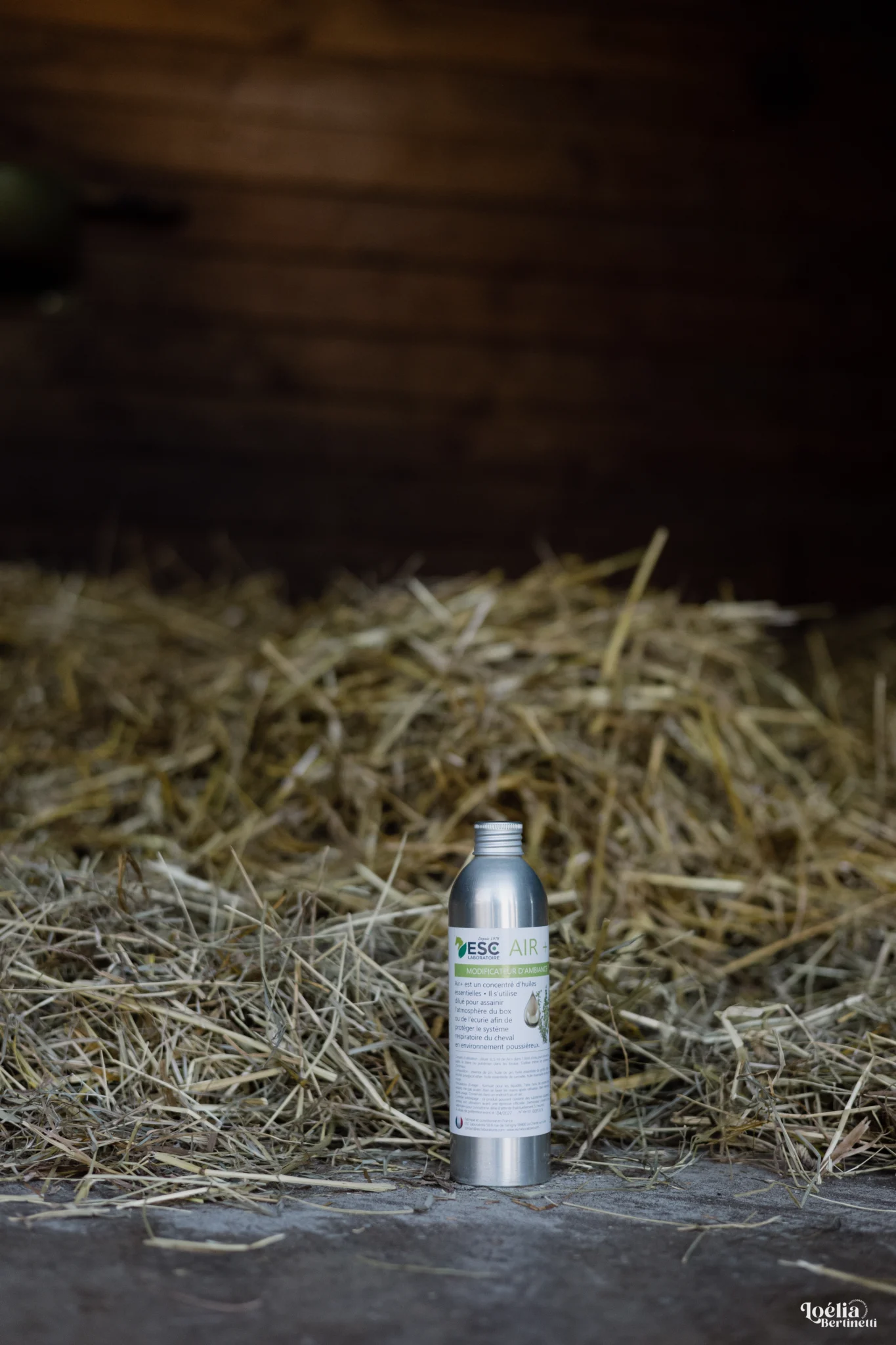
- Clean your litter box and stables : with our Air +. It is used diluted to clean up the atmosphere of the box or stable to protect the respiratory system in dusty environments.
Ventilate the stable
A well ventilated box divides by 3 to 5 the concentration of spores and ammonia. Ventilation is as important as choice of litter.
- Keep windows open even in winter : the cold is much less harmful for a horse (which has a suitable cover) than the bad air. A horse adapts to the cold, not the dirty air.
- Ideal ventilation : transverse (windows or openings on two opposite sides), without direct air current on the horse. The air must circulate around the horse, not on it.
Manage the exits in the meadow according to pollinal peaks
- Avoid exits on the meadow between 10am and 5pm during pollen peaks (graminates: May-July, mushrooms: April-May and September-October). At this point, the concentration of pollen in the air is highest.
- Prefer early morning or after rain : the rain plates the pollens on the ground and purifies the air temporarily. The outings of dawn, before the sun dries dew, are also safer.
- Choose paddocks with short or maintained vegetation : High grasses (> 30 cm) release much more pollen than ground or ground grasses. A paddock « mowed » by horses or mechanically is less allergenic.
- In case of headshaking pollen Anti-float masks equipped with a nasal net (full mask type) limit direct exposure of the nose to pollen. This is not a miracle solution, but it can bring partial relief.
Supplements and natural support in case of respiratory allergy of the horse
The complements do not replace environmental management, but can complement it usefully.
For example, you can explore:
- Expecting Plants (thyme, eucalyptus, Plantain) : they facilitate the elimination of mucus in the bronchi by fluidizing secretions. Mucus evacuates more easily by coughing, clearing the airways.
- Soothing Plants (rosemary, boswellia, turmeric) : they accompany respiratory comfort by supporting the body in the face of background bronchial inflammation, without being anti-inflammatory in the drug sense.
- Vitamin C and antioxidants They support the immune response and limit bronchial oxidative stress, particularly intense during an allergic reaction.
Supplements support allergy management, but never substitute for environmental action. A horse that continues to sleep on dusty straw will not see any lasting benefit, even with the best complement in the world.
Discover our supplements to support the horse's respiratory tract
FAQ – Horse respiratory allergies
My horse sneezes often in the spring, is it an allergy? Occasional sneezes are normal (to hunt an insect, a spot dust). Frequent and repeated sneezing, combined with clear nasal discharge, suggest allergic rhinitis, often linked to pollen from grasses or trees. A veterinary consultation can confirm and identify the allergens involved.
What is the difference between respiratory allergy and emphysema? Respiratory allergy refers to the exaggerated immune response to inhaled allergens. Emphysema (or severe equine asthma) is the result of repeated allergic exposures not managed, which lead to chronic and irreversible pulmonary lesions.
Can my horse be allergic to hay in winter too? Yes, absolutely. Hay moulds are present year round, regardless of season. A spore-allergic horse will react as soon as it is exposed to poorly preserved hay, stored in a wetland, or simply aged, including in the middle of winter.
How do I know what allergen is involved in my horse? Intradermal tests performed by a veterinarian identify specific allergens (pollens, mites, moulds). In the absence of a test, an elimination approach works well: change the litter, soak the hay, step out more in the meadow (or the reverse), and observe. The responsible allergen is often revealed by the improvement observed after environmental modification.
Does desensitisation work in the allergic horse? The immunotherapy (desensitisation) exists in the horse, but its access remains limited and its results vary from one individual to another. It requires a prior allergen test to accurately identify allergens and rigorous veterinary monitoring over several months. It is mainly envisaged when environmental management remains insufficient despite all the measures taken.
The Word of the End
The Respiratory allergies of the horse are often detected too late, once the lung lesions are installed. However, a slight cough at the beginning of the work, repeated sneezing in the spring, or an unexplained drop in form at the exercise are all early signals that deserve your attention.
Acting on the environment of your horse (quality of hay, choice of litter, ventilation of the stable, management of exits in the meadow) remains the most effective measure. The respiratory supplements then strengthen this base, supporting the organism in the face of allergens that cannot always be eliminated completely.