
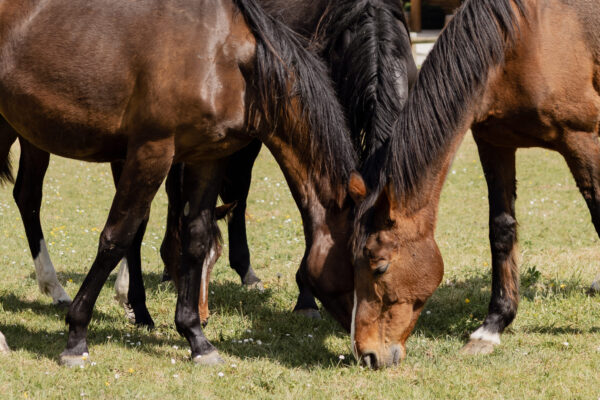
According to PiroQuest study conducted between 2019 and 2023 by the four French veterinary schools, 38.3% of horses living in the meadow are asymptomatic carriers of piroplasmosis...a dizzying number.
However, the majority of these infected horses show no clinical signs until the day when stress, intense effort, intercurrent disease or reduced immunity trigger an acute crisis.
That's all. the paradox of piroplasmosis : ubiquitous, often silent, and able to turn abruptly into a vital emergency for your horse. At the end of this article, you will understand the two forms of the disease (and the two parasites involved) as well as their differences, the treatment options that are available to you and you will especially know how to manage a chronic horse in daily life to relieve it as much as possible.
What is equine piroplasmosis?
The equine piroplasmosis is a parasitic disease transmitted by hard ticks (of the Ixodidae family). The parasites responsible are therefore neither viruses nor bacteria: they are microscopic protozoaeither tiny single cell animals that colonize the red blood cells of the horse and cause them to burst.
Understanding this mechanism of haemolysis (the destruction of red blood cells) is key to grasp why horse piroplasmosis can be so serious. Each destroyed red blood cell releases its contents into the bloodstream (hemoglobin, bilirubin and iron). The organism must dispose of these toxic wastes. The liver packs to treat this overload, the kidneys struggle to filter proteins and the anemia settles. It is from this mechanism that all the symptoms of piroplasmosis arise:
- progressive anaemia,
- fever (immune response),
- ictery (jaundice by accumulation of bilirubin),
- and generalised fatigue.
Significant grade : piroplasmosis is not contagious directly from one horse to another. An infected horse will never contaminate another by simple contact. Transmission requires a vector (tick) or a blood route (stainless needle, transfusion). This changes everything in the day-to-day management of the bearer.
Two parasites, two different diseases
The two parasites responsible for piroplasmosis are Babesia caballi and Theileria equi. This distinction is often confusing: two names are mentioned without explaining what it actually changes for the owner. However, it determines the prognosis, the chances of healing and the constraints of life of the horse.
Characteristics | Babesia caballi | Theileria equi |
Gravity | Generally less severe | Much more serious, more violent symptoms |
Natural disposal | The horse can get rid of it naturally | Practically impossible to eliminate (life-long port) |
Prevalence in France | 3.2 % of carriers (PiroQuest study) | 35.9% of carriers (very largely dominant) |
Falling | Rare after treatment | Frequent during stress or decreased immunity |
Post-treatment serology | Antibodies gradually disappear (6 months to 2 years after treatment) | Generally positive for life |
International export | Possible after treatment and negative serology | Prohibited to USA/Canada/Australia (persistent seropositivity) |
To be retained If your horse is tested positive at Theileria equi, you will have to manage a chronic infection. If it is the Babesia caballi, the horizon is more favorable. The diagnostic test must therefore specify which parasite is responsible for piroplasmosis of the horse.
How does a horse catch piroplasmosis?
Ticks are the main vector of the disease. This is how she transmits the parasite.
The tick: the main vector
In France, vector ticks are mainly the Dermacentor reticulatus and Dermacentor marginatus. These hard ticks develop in forested areas, forest edges, unmatured grasslands and areas of refusal in pastures (i.e. those that horses do not eat). They are active twice a year: in spring (April-May) and autumn (September-October).
The cycle is simple: the infected tick feeds on a healthy horse and transmits the parasite via its saliva. But that's not all: the contaminated tick also transmits the parasite to its own offspring. This is what we call the Transovarian transmission. Next generations are born infected, infecting horses. A tick can therefore colonize an entire region.
Other routes of contamination
Other leaders of equine piroplasmosis include:
- A needle or soiled material A syringe re-used between two horses or a contaminated tick is often forgotten but very real.
- Blood transfusion One of the few situations where the blood of a positive horse can contaminate a healthy horse.
- Transmission in utero : a pregnant mare can contaminate her foal in the womb. This vertical transmission sometimes leads to neonatal piroplasmosis, often fatal because the newborn does not have the necessary immune defenses to protect himself.
Global warming expands the risk zone
Historically, the 2/3 south of France concentrated the majority of cases. But ticks go north with global warming. According to INRAE data (PiroGoTick programme)One can expect a gradual expansion of the affected areas in the coming years. It is therefore a reality to be prepared for.
Recognizing symptoms: acute, chronic and healthy
The disease occurs in three different ways: acute, chronic, or asymptomatic. Here's how to distinguish them.
The acute form: the urgency
The acute form is a brutal phenomenon. In 24 to 48 hours, a horse can pass from « slightly tired » one « critical condition ». The warning signs are spectacular:
Sign | What it translates |
Sudden fever > 40° C | Immune response to exponential multiplication of parasites |
Pale or yellow musks (icter) | Mass destruction of red blood cells, accumulation of bilirubin |
Dark urines (brown-red) | Haemoglobinuria: free haemoglobin in the urine |
Complete apathy, refusal to move | Severe anaemia causing widespread fatigue |
Increased heart and respiratory rate | Compensation for anaemia: the heart must pump faster to oxygenate tissues |
Oedema of members | Disruption of blood circulation, decrease in oncotic pressure |
Critical point Without treatment, the acute form can be fatal within 24 to 48 hours. Any sudden fever associated with yellow mucous membranes should therefore prompt you to call the veterinarian immediately, without waiting for the results of analysis.
The chronic form of horse piroplasmosis: insidious and subdiagnostic
The chronic form shows the same signs as the acute form, but in a gradual and attenuated manner. The horse shows:
- a slow decline in performance,
- weight loss imperceptible,
- a capricious appetite,
- a lack of general training.
These signs are easily attributed to fatigue, overwork or other pathology. Therefore, chronic form is so often diagnosed late (or never.)
Asymptomatic carrier: the most common case
Nearly 40% of infected horses have no clinical signs. They normally live, reproduce, travel, participate in competitions. But they remain bearers of the parasite and constitute a living reservoir for ticks that bite them. The passage of « healthy carrier » to « Clinical form » may occur at any time due to stress (transport, move, competition), reduced immunity, intercurrent illness or intense effort.
How to confirm the diagnosis?
Method | What it detects | When to use |
Blood PCR | DNA of the parasite (very sensitive) | Acute form: confirms active presence |
Blood frottis | Direct observation of parasites in microscopic GR | Urgency: rapid but not sensitive (negative, absent) |
ELISA/IFI Serology | Antibody against parasites | Chronic and carrier forms: detects past exposure |
RFC (fixing of supplement) | Antibody — official test | Mandatory for international export |
Significant grade : a positive PCR result in a fully asymptomatic horse does not mean that it should be treated. Symptoms-free porting is the most common scenario and the treatment of piroplasmosis is not annoyed: it carries many risks. A veterinarian must therefore assess the value of treatment on a case-by-case basis.
Treatment of piroplasmosis in horses: effective but delicate
Piroplasmosis can be treated, but the remedy is not without risk. Understanding the protocol helps anticipate complications for your horse.
Imidocarb (Carbesia): the reference treatment
L-imidocarb dipropionate is administered by intramuscular injection by the veterinarian. The standard protocol is 2 to 4 injections spaced 24 to 72 hours depending on the parasite. This treatment is very effective to eliminate Babesia caballibut much more limited against Theileria equi, which often persists despite treatment.
Side effects are far from anodizing : colic, diarrhoea, excessive sweating, decubitus (horse no longer rising). The horse should be carefully monitored after each injection.
It should also be noted that the imidocarb does not have specific marketing authorisations for horses in France. Your veterinarian can nevertheless use it, but under his personal responsibility.
The associated symptomatic treatment
The veterinarian sets up in parallel:
- anti-inflammatory drugs to lower fever,
- diuretics in patients with oedema,
- fluid therapy (perfusion) in severe cases,
- strict rest during treatment.
The recovery: the important phase
Treatment kills parasites, that's right. But he doesn't repair the damage they caused. The horse comes out of the treatment with a very reduced stock of red blood cells, a liver required by the disposal of waste from hemolysis and a weakened immune system. Red blood cell reconstruction takes at least 3 to 6 weeks. So if he gets back to work too soon, there's a high risk of relapse.
Support the body during recovery
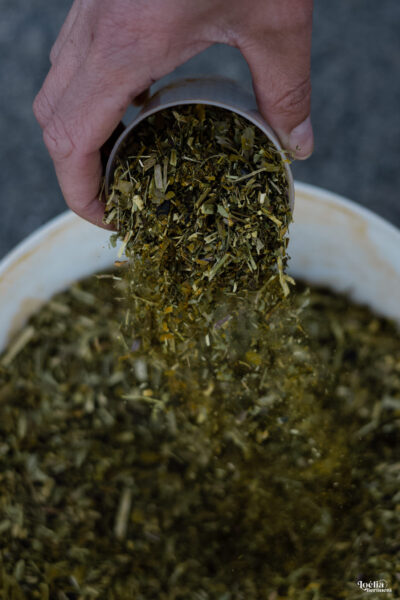
After heavy treatment, the body needs targeted additional support. The most relevant active ingredients at this stage include:
Draining and hepatoprotective plants The liver eliminated bilirubin from hemolysis massively. He therefore needs support to regenerate and restore his detoxification functions and support the balance of the intestinal microbiota, often disturbed after heavy treatment.
Immunostimulating Plants (in the form of authorised food supplements, after veterinary advice) support its natural defences to avoid relapse during this phase of maximum immune vulnerability.
Essential minerals and vitamins (iron, copper, zinc, vitamins B – essential for the synthesis of red blood cells and vitamin K – in support of clotting) are all essential for the reconstruction of red blood cells. Iron deficiency, for example, will hinder the production of new hematia.
Discover our mix of plants specifically formulated for support the horse body in case of piroplasmosis.
Also find all our natural supplements for Immunity and liver function.
The recovery schedule
Phase | Duration | What We Do |
Strict rest | 7–14 days post-treatment | No effort, daily monitoring (temperature, mucosa) |
Stepping back | Weeks 3–4 | Light exercise only, no sustained effort |
Gradual recovery | Weeks 5–8 | Light Trot, without constraint, recovery monitoring |
Blood control | 6–8 weeks after treatment | NFS to check red blood cell reconstitution |
Living with a horse with chronic piroplasmosis
A chronic carrying horse can live normally provided it understands what to watch and anticipate.
What « Chronic carrier » means concretely
The horse normally lives most of the time: it can be mounted, trained, out in competition. The parasite (especially the Theileria equi) remains present in the body but is "controlled" by the immune system. The risk of relapse is nevertheless very real: any stressor can reactivate the clinical form of piroplasmosis.
Risk situations to be anticipated
- Long transport Disruption of rhythm, muscle fatigue, psychological stress.
- Intensive competition : intense effort combined with mental stress.
- Environmental change : moving, new stable, deracinated horse.
- Other intercurrent disease : equine flu, colic, injury (any infection reduces immune defenses.)
- Vaccination - creates temporary immune stress.
- Periods of high tick activity (Spring/Autumn): Risk of overinfection with a new bite.
What the owner can do every day
- Take the temperature regularly during periods of risk. A temperature above 38.5°C that persists must be alerted.
- Take the temperature before any major transport or competition to detect early signs of relapse.
- Support immunity prior to identified stress periods : better to anticipate than to manage a crisis. .
- Strictly fight ticks : daily inspection of areas at risk (neck, ars, inner thighs, perineum), immediate removal of the tick (attention to turn the tick well and do not tear it off), disinfection, regular maintenance of the pastures.
Immune support prior to stress periods can help limit relapses. Discover our adapted formulas:eleutherococcus and Piromix.
Prevention of piroplasmosis in horses: limiting the risk of contamination
Prevention is based entirely on the fight against ticks: No vaccine is available to date.
For protect horses from piroplasmosis, It is therefore advisable to apply these measures:
- Daily inspection horse, especially on the return of walks. Key areas: neckline, leg region, ars, perineum, ears, inner thighs.
- Immediate removal of ticks to the ticks (soft rotation, do not remove it because leaving the implanted head exposed to secondary infection).
- Careful maintenance of pastures : clear the edges, cut the hedges under the fence to avoid dense vegetation, mottle the areas of refusal (high grass = ideal area for ticks).
- Avoid access to wooded edges during tick activity peaks (April-May, September-October).
- Use single-use needles injections and samples.
FAQ - Preventing and managing equine piroplasmosis
My horse is carrying piroplasmosis, is it contagious for other horses?
No, piroplasmosis is not transmitted directly. Contamination requires a vector (tick) or a blood route (needle, transfusion). On the other hand, a carrying horse can infect ticks that prick it, which can then transmit the parasite to another horse.
My horse did a piroplasmosis, can he fall back?
Yes, especially if he is carrying the Theileria equi, which persists despite the treatment. A relapse may occur as a result of stress, intense effort, reduced immunity or new tick bite overinfection. Supporting horse immunity reduces this risk.
Can a carrying horse travel internationally?
Within the EU, a health certificate is sufficient. For export outside the EU (US, Canada, Australia), negative serology is required. A positive horse in Theileria which usually remains HIV-positive for life, de facto prohibiting exports to these countries.
Is treatment with Carbesia dangerous?
Imidocarb is powerful and effective, but its side effects are significant (colic, diarrhoea, sweating, reduction). Treatment must be performed and monitored by a veterinarian. The doses required to treat the Theileria equi are higher and therefore more risky than for Babesia caballi.
How do I know my horse was snatched by an infected tick?
We can't find out immediately. This is why daily monitoring (inspection + rapid removal) and regular temperature-taking at risk are the best reflexes to prevent or detect piroplasmosis as soon as possible.
The Word of the End
Piroplasmosis is one of the most common parasitic diseases in horses in France and yet the majority of carriers do not know until the first crisis. Understanding the two parasites involved, knowing how to recognize the warning signs, and above all correctly accompanying the recovery and daily life of a carrying horse makes all the difference between a disease suffered and a controlled management.
A horse well supported in its recovery has infinitely less risk of relapse and the quality of life it regains is well worth all these efforts.
Support your horse's body in case of piroplasmosis with Piromix
Discover all our supplements for support immunity of the horse and its liver function
Dr. Marc Burin des Roziers is an equine veterinarian, graduated from the National Veterinary School of Alfort (1999). Specializing in sports horse orthopedics and ophthalmology, he practiced for more than ten years in equine clinic before joining ESC Laboratory in 2018. Passionate about medicinal plants, he designs product formulations and contributes to the brand's scientific expertise.