Horse Vitamins: role, deficiencies and natural complements
Vitamins play a catalytic role in the horse's body: although they are only needed in small quantities, they are essential for growth, immune system and performance.
At ESC Laboratory, we offer vitamins for horsesx rigorously selected to compensate diet decreases and support metabolism during periods of fatigue, moulting or intense exercise.
Discover below our natural vitamin supplements, to be used as a punctual treatment or as background support.
-
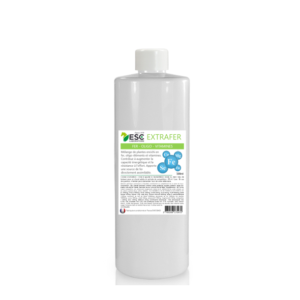
EXTRAFER – Resistance to stress and horse recovery – Multivitamins and plant extracts
- 21,01 € TTC
- Multivitamin solution rich in plant extracts • Recommended in support of sports effort preparation and recovery, in case of fatigue or during recovery. Exclusive formulation ESC Laboratory Flacon 500ml
- Add to cart
-
Best Seller
- -10%
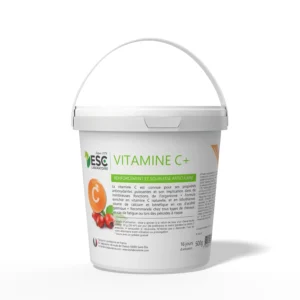
VITAMIN C+ – Support of horse effort – Contains natural vitamin C
- The initial price was: 26,60 €.23,94 €The current price is: 23.94 €. TTC
- Vitamin C is known for its powerful antioxidant properties and its involvement in many body functions. Formula enriched with natural vitamin C, and lithothamne source of calcium and beneficial for gastric acidity. Recommended for all types of horses, in the event of fatigue or during periods of risk. Exclusive formula developed and conditioned by our...
- Add to cart
-
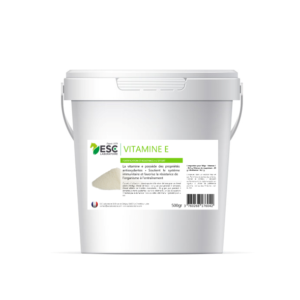
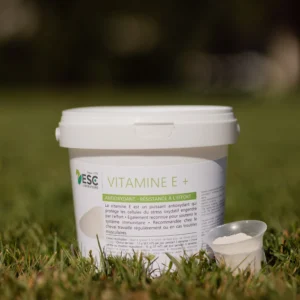
VITAMIN E + – Antioxidant, immunity and resistance to horse effort
- 29,90 € TTC
- Essential nutrient, vitamin E is a powerful antioxidant that protects cells from oxidative stress induced by exercise. It also contributes to the proper functioning of immunity. Recommended in horses at work or in cases of muscle disorders. Bucket 500g
- Add to cart
Why are vitamins essential to horse health?
Vitamins contribute to almost all the great functions of the horse's body: growth, immunity, energy production, hair and horn quality.
Liposoluble vitamins (A, D, E, K), stored in fatty tissues, are distinguished from hydrosoluble vitamins (group B, C), not stored and therefore to be added more regularly.
A horse in the meadow, which eats grass, covers part of its needs naturally. But as soon as the ration is limited to hay, or during intense effort, convalescence or seasonal change, the needs increase and additional input becomes relevant.
Even granules may not cover all the needs.
What are the signs of vitamin deficiency in horses?
Vitamin deficiency is not always shown specifically, making it difficult to identify. Several signs must nevertheless alert: a dull hair or abnormally long moult, unusual fatigue despite a stable workload, a general decrease in form, weakened immunity with more frequent infections, or even slower recovery after exercise.
These symptoms remain non-specific: they can also translate a deficiency in minerals or trace elements, a digestive problem or an underlying pathology. In case of doubt, an analysis of the ration, carried out with an equine nutritionist or veterinarian, makes it possible to identify precisely the deficiency(s) involved before choosing a suitable supplement.
Vitamin Vitamin: Roles and Natural Sources
Each vitamin has a specific role in the horse's body. Here are the five essential vitamins to know, their function and their natural sources.
Vitamin A: vision, growth and immunity
Vitamin A supports vision, bone growth and cell renewal, especially in the growing young horse. She also participates in immune defenses. It is naturally found in good quality carrots and green hay.
Group B vitamins: energy and metabolism
Vitamins B1, B2, B3, B6 and B12 contribute to the energy metabolism and production of red blood cells. In horses, the majority of them are synthesized by the flora of the large intestine from a high fibre ration, which makes the deficiencies rare in a healthy animal. However, additional intake may be useful in case of disturbed intestinal flora (stress, antibiotics, low fibre ration) or increased need for effort.
Vitamin C: antioxidant and collagen synthesis
The horse naturally synthesizes vitamin C with its liver, which usually keeps it from deficiencies. A complementary intake remains useful during periods of stress, growth or liver problems, as this synthesis can then decrease. (see our Vitamin C+, effort support)
Vitamin D: calcium and bone
Vitamin D regulates the absorption of calcium and phosphorus, which is essential for the strength of bones and teeth. In horses, hay is relatively rich in vitamin D2 and is an interesting source. Horses living indoors or fed with long-term hay are more at risk of deficiency.
Vitamin E: antioxidant, muscle and immunity
Powerful antioxidant, vitamin E supports muscle and immune function, especially in sports horses subjected to intense work. Its main natural source is fresh grass in the meadow: hay, even of good quality, loses much of it from the mowing and during storage. Little or no horses in the meadow, especially in winter, are therefore most affected by a need for supplementation. Our Vitamin E+ supplement allows to cover needs and participate in the proper functioning of immunity in the horse.
When to do a vitamin cure for his horse?
Vitamin treatment is recommended in several situations:
- changes in season, especially at the entrance to winter,
- during moulting,
- during temporary fatigue,
- recovery,
- or upstream of a competition season to support the organization in the face of increased work.
In a healthy horse, one to two cures per year are sufficient usually for two to four weeks. Unlike the vitamin mineral supplement given in the long run, vitamin cure is a one-off approach, to be adapted according to the needs observed and, if necessary, advice from a veterinarian or equine nutritionist.
What is the difference?
The CMV (mineral vitamin supplement) In the long run, it is necessary to balance a ration that is structurally delicate, especially in horses fed exclusively to hay or cereals: it must cover all the needs of minerals and vitamins on a daily basis.
The vitamin cure responds to a one-time need: a stroke of fatigue, a change of season, a period of increased effort.
If your horse receives a complete industrial ration, it usually needs a supplement only in case of special situation. A nutritionist will allow you to take stock and see what your horse needs. Because an overload of one or more vitamins can be harmful.
Frequently asked questions about horse vitamins
What are the signs of vitamin deficiency in horses?
Vitamin deficiency often results in dull hair, difficult moulting, unusual fatigue, decreased shape or weakened immunity (more frequent infections). These signs remain non-specific: in case of doubt, a ration analysis or veterinary opinion can confirm the deficiency before supplementing.
What is the difference between a CMV and a vitamin cure?
CMV (mineral vitamin supplement) is a long-term supply to balance a continuous curing ration, especially in hay-fed horses. The vitamin treatment is ad hoc and aims to support the body at a specific time: temporary fatigue, change of season or period of competition.
When is it necessary to make a vitamin cure for his horse?
A vitamin treatment is recommended for seasonal change (including winter entry), during moulting, during temporary fatigue or prior to a competition season. In a healthy horse, one to two cures per year, over two to four weeks, are generally sufficient.
Does a horse in the meadow need vitamin supplements?
A horse with a pre-advantage of fresh and varied grass covers some of its needs naturally, but grass alone is not always enough, especially in winter or on poor meadows. A targeted supplement remains useful in the event of signs of deficiency or exclusively forage rations.
What vitamins are most important for a sports horse?
In sports horses, vitamin E plays a key role as an antioxidant and for muscle support, as well as group B vitamins (especially B12) for energy metabolism. An input adapted to the intensity of the effort limits fatigue and supports recovery.
How long is a vitamin cure for a horse?
A vitamin cure usually lasts between two and four weeks, renewable depending on the horse's needs and the persistence of the observed signs. Unlike the continuous VMC, the cure remains a one-off approach and not a substantive complement.
What are the best natural sources of vitamins for a horse?
Fresh grass in the meadow remains the best natural source, especially for vitamin E, largely lost in hay after mowing and storage. Vitamin A is found in carrots and green hay, and vitamin D comes mainly from sun-dried hay, with limited dermal synthesis in horses.
Sources: Kentucky Equine Research, Mad Barn, Getty Equine Nutrition