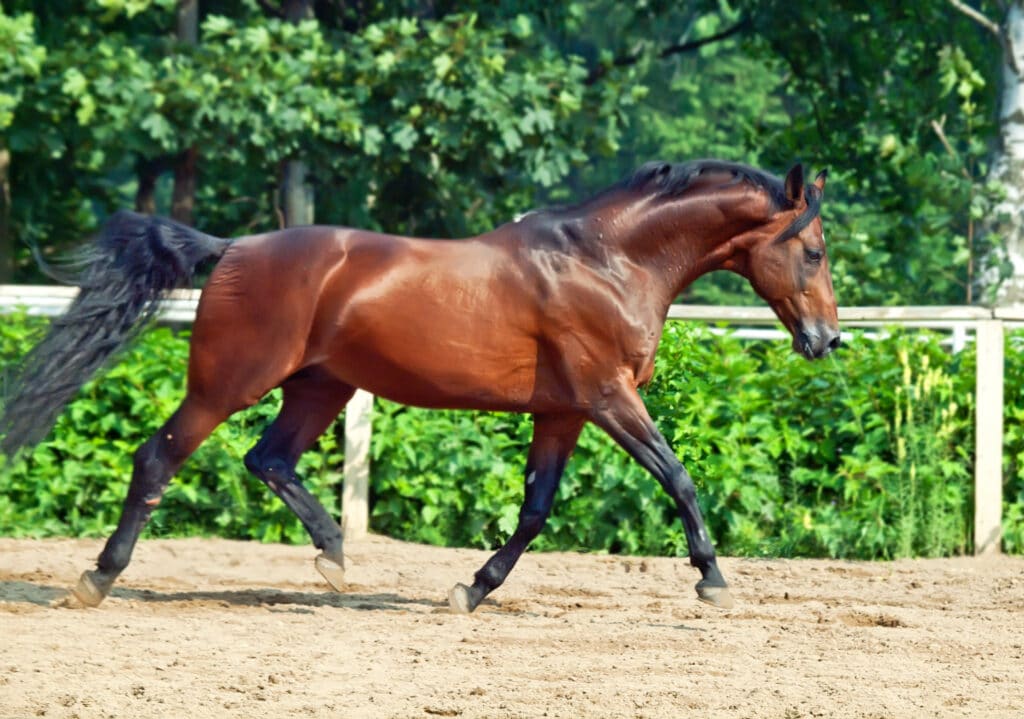
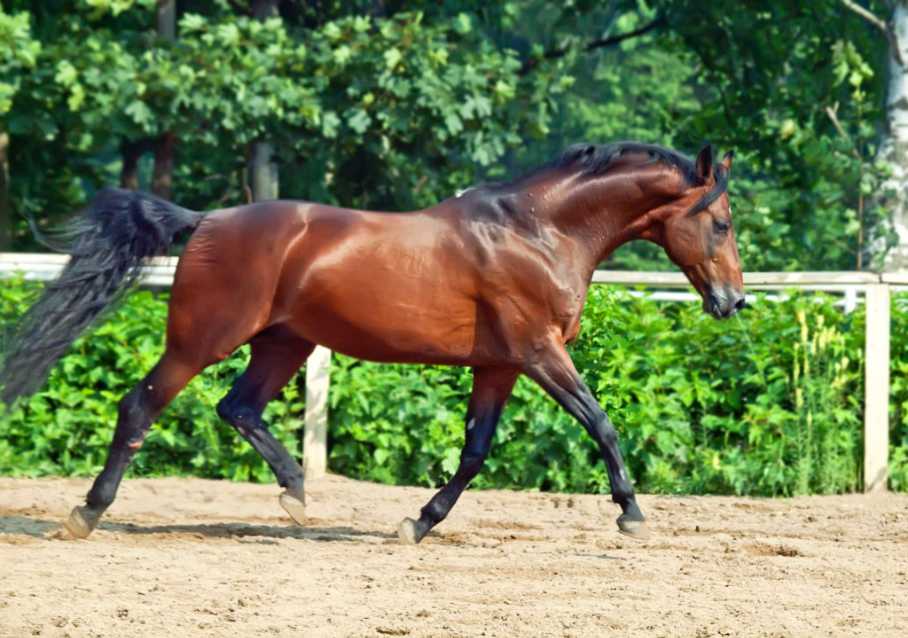
Your horse cold box, seems stiff at the start or less efficient at the effort? Maybe he's suffering from osteoarthritis. This joint pathology does not only affect older horses: oversolicited sports horses may also be affected, sometimes from an early age. Symptoms, causes, natural solutions to relieve it, and an essential question for many riders: can it continue to be mounted? The point with Marc Burin des Roziers, our equine veterinarian.
What is osteoarthritis in horses?
Osteoarthritis, or osteoarthritis, is a degenerative disease which touches the joints of the horse. It translates into a progressive degradation of joint cartilage, sometimes accompanied by underlying bone damage, resulting in pain, stiffness and reduced mobility. This phenomenon is common in horses as well as in humans, and it particularly concerns the most sought after joints according to the discipline practiced: jumping obstacle, running, dressing or simple daily work.
Contrary to a popular idea, osteoarthritis is not reserved for elderly horses. Working horses, whatever their age, can develop a Early osteoarthritis because of the repeated oversolicitation of their joints. It usually affects the limbs, but can also affect the back or cervical vertebrae.
What are the symptoms of osteoarthritis in horses?
The first signs ofosteoarthritis in horses are often discreet: a lameness « Cold » which attenuates when heated, local stiffness, moving joint cracks, or a warm, swollen joint. A less efficient horse at work must also alert.
The osteoarthritis remains complex to detect: an isolated lameness does not always mean that a horse is affected by it. Several symptoms should however put the chip in the ear:
- He suffers or seems to suffer from the manipulation of a joint
- Your horse has stiffness on an area of the body, or you hear cracks when it moves a member
- It can cold, at the beginning of work, and lameness improves to warm up
- One joint is hot and/or swollen
The limbs are statistically the most affected, but your horse may also suffer from back or cervical vertebrae. If you suspect osteoarthritis, it is essential to consult your veterinarian, who will make a definitive diagnosis after an X-ray.
Symptoms that evolve with the disease stage
At the beginning, the signs are punctual and often reversible when heated: slight stiffness, discreet cold lameness, sometimes only visible with the informed eye of a professional.
At a more advanced stage, the pain becomes more constant, the lameness persists even after heating, the joint can remain constantly swollen and the horse's mobility is significantly reduced, including outside work. The earlier the care takes place, the more it is possible to slow down this development.
What are the main causes of osteoarthritis in horses?
Osteoarthritis often not one cause, but several.
We distinguishprimary osteoarthritis, which corresponds to a natural degeneration of the joint , andsecondary osteoarthritis, caused by abnormal constraints. The main factor remains the work, and in particular the repeated oversolicitation of the joint, which can also be inflamed as a result of trauma like sprain.
Other risk factors, related to the conformation or life course of the horse, are also involved:
- Poor plumbing due to lack of maintenance or malformation
- Growth pathologies, such as osteochondrose, that can cause early osteoarthritis
- Age: over time, cartilage becomes fragile and the risk of osteoarthritis increases
- Infections: The penetration of a germ into a joint can degrade cartilage
- Some chemicals, such as repeated intraarticular cortisone injections
- Overweight, which imposes additional stress on cartilage
How to relieve the osteoarthritis of the horse naturally?
The osteoarthritis does not cure: a cartilage already degraded cannot be regenerated. There are, on the other hand, many solutions for relieve symptoms and slow down its evolution, combining if necessary veterinary treatment, natural supplements and lifestyle adaptation.
Drug treatments
If your horse's osteoarthritis is at an advanced stage, your veterinarian may prescribe medication to relieve pain. The most common are NSAIDs (nonsteroidal anti-inflammatory drugs), which reduce inflammation and associated pain. Infiltration, or intra-articular injection, is another option: it can then act as steroidal anti-inflammatory drugs, d
Food supplements and plants
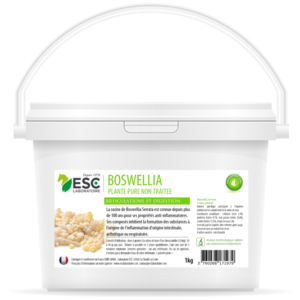
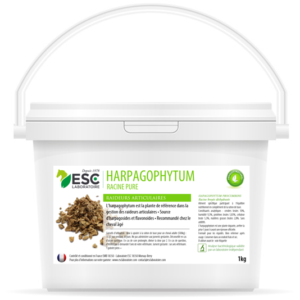
Since it is not possible to cure osteoarthritis, the aim is to relieve its symptoms and slow down its evolution over the long term, via a background treatment. Two plant families are particularly documented for their natural anti-inflammatory properties: I-harpagophytum and boswellia.
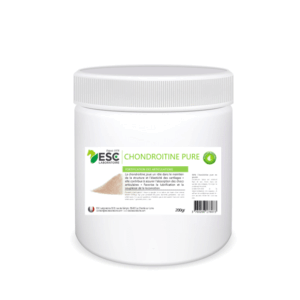
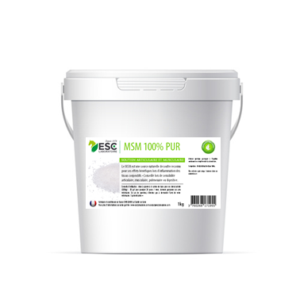
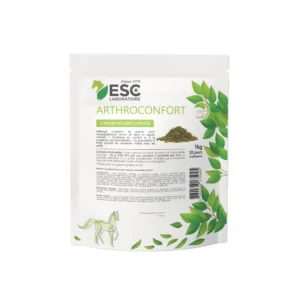
These plants are frequently associated with active ingredients that directly support cartilage structure: glucosamine, chondroitin and MSM. Find all these assets in our selection of complements osteoarthritis horseformulated to accompany horses suffering from joint disorders.
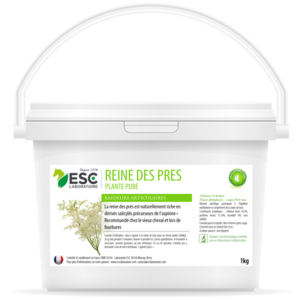
Some plant synergies, such as Arthromix, combine several of these plant assets into a single formula for complete joint support. You will also find all our plants for horse osteoarthritis at the unit, to compose a custom cure with your equine veterinarian or naturopath.
Food, weight and hygiene
Weight management is too often neglected: every extra kilo represents an additional mechanical constraint for already weakened joints. A balanced diet, adapted to the actual activity of the horse, helps to limit this overload. The type of soil also plays an important role: preferring flexible and regular soils for daily work limits repeated shocks on the joints. Finally, a gradual warming before each session, even short, helps to reduce the morning stiffness characteristic of the osteoarthritis.
Other complementary approaches
Beyond dietary supplements, other natural approaches can accompany the management of osteoarthritis: equine osteopathy, to restore mobility to compensatory joints, physiotherapy (massages, gentle mobilization), or cataplasms dclay, traditionally used for their local soothing effect on hot or swollen joints. These approaches combine well with a cure of complements, without replacing them.
Can an arthroscopic horse continue to be mounted?
Yes, in most cases, an arthrosus horse may continue to be mounted, provided that the work is adapted: longer heating, regular and moderate exercises rather than intense ad hoc efforts, prefer flexible soils, regularly assess the intensity of the work by a veterinarian.
Contrary to an accepted idea, total cessation of work is not always the best option: a regular and moderate movement maintains joint mobility and muscle mass that supports the joint, while prolonged immobilization can instead accelerate stiffness. The master word is adaptation, not stopping:
- Extend the heating phase, step by step, before putting into action
- Focus on regular and moderate work with intense one-off efforts
- Adapting the terrain: avoid hard, irregular or too deep soils
- Pay attention to the warning signs: a lameness that worsens or no longer improves in heating must lead to a break and veterinary advice
- Regularly reassess the level of work with the veterinarian, especially if treatment is in progress
Each case remains specific to the stage of disease evolution and the discipline practiced: it is your veterinarian, possibly associated with an equine osteopath, who will be able to define the most suitable work programme for your horse.
What is osteoarthritis in horses?
Osteoarthritis is a degenerative joint disease. It results in a progressive degradation of cartilage and sometimes underlying bone, causing pain, stiffness and decreased mobility. It mainly affects the limbs, but also the back and cervicals.
What are the first signs of osteoarthritis in a horse?
The first signs are often discreet: a lameness « Cold » which slows down to heating, local stiffness, joint cracks, or a warm, swollen joint. A less efficient horse at work can also be a warning signal.
Can an arthroscopic horse continue to be mounted?
Yes, in the majority of cases, provided the work is adapted: longer heating, regular and moderate exercises rather than intense punctual efforts, soft soils, and veterinary follow-up to adjust intensity according to the evolution of the pathology.
Does osteoarthritis only affect older horses?
No. If age is a significant risk factor, sports or work horses can develop early osteoarthritis due to joint oversolicitation, poor plumbing or trauma, regardless of age.
Which plants are effective against horse osteoarthritis?
L-harpagophytum and boswellia are the most documented for their natural anti-inflammatory properties. They are often associated with glucosamine, chondroitin, and MSM, which support the structure of cartilage over the long term.
How long is a cure for horse osteoarthritis?
Treatments of plants or joints are usually done over 1 to 3 months, renewable depending on the evolution of the horse. Prolonged use, especially in combination with drug therapy, should continue to be followed by a veterinarian.
When to consult a veterinarian for her horse's osteoarthritis?
Upon the appearance of persistent signs: repeated lameness, stiffness, joint swelling. Only a veterinarian can make a definitive diagnosis, usually by X-ray, and refer to treatment adapted to the stage of the disease.
In summary
The osteoarthritis of the horse does not heal, but it is managed: veterinary diagnosis, adapted natural supplements and adjustment of the work, in the vast majority of cases, allow to preserve the comfort and mobility of your horse over the long term. Discover our selection of dietary supplements for horse osteoarthritis, formulated from plants and active ingredients known to support joints on a daily basis.
-
Best Seller
-
Best Seller
-
HARPAGOPHYTUM – Riders and joint sensitivity – Pure plant
- 16,60 € – 133,80 €Price range : 16,60 € 133.80 €
- Choice of options