
Horse nutrition is a very complex subject, depending on the needs of each animal. Among the different foods used for horses, mash is still a little known option,but traditionally used since the late 19th century in racing stables. This meal cooked in a large volume of water offers many benefits for the health of horses, provided you do not overdo it.
If you're considering giving mash to a horse, here's all you need to know aboutits benefits and how to use it properly.
What is horse mash?
The mash for horses refers tofood that is soaked before being given to the horse.The mash (or pureed in French) are often made from cereals (oats, barley and/or corn), possibly supplemented by high-fibre wheat sound, andFlaxseedrich in mucilages and other ingredients according to recipes.
Historically, the mash of sound intended for horses wasoccasionally given after more difficult work,like a hunting day, to moisturize the horses and facilitate recovery. In England, from which they came, they were distributed especially in winter to avoid overheating horses. Wheat and flaxseeds, by their slightly laxative properties, were used to regulate intestinal transit.
 These preparations have for a time lost in popularity, as their alleged laxative effects are only very little supported by scientific studies. But also becauseA sudden change in diet is not always desirablefor horses because they can weaken their intestinal flora.
And probably even less after a period of intense work, during which the first objective should be to contribute to the restoration of the horse's energy reserves.
Thehorse mashhave alsoan inverted calcium/phosphorus ratioand can therefore unbalance the nutritional balance of the animal (which can nevertheless be compensated by providing other sources of calcium). However, as there are better alternatives available, the sound has fallen into disgrace.
There is now on the marketa wide range of foods in the form of mashfor horses. Thesenew incomeare generally based on highly digestible fibres such as alfalfa, flaxseed, sugar beet or grass.
Why give his horse mash?
On the assumption that we are going to talk here aboutnew mash recipesand not from its traditional version to the sound, herethe good reasons to feed his horse in Mash.
1. Rebuilding energy reserves
Particularly active horses, producingan efstrong physical sustained and prolonged, will draw from their energy stocks (food carbohydrates). But this energy reserve will determine the length of time the horse cansupport this intense effort, and the subsequent recovery.
Mash is an interesting ingredient to allow your horse torestore its reserves of muscle glycogens,because of its carbohydrate content (and more specifically starch) brought by cereals. It will therefore be necessary to adjust the amount given to your horse according to its activity and needs.
2. Rehydrate the horse
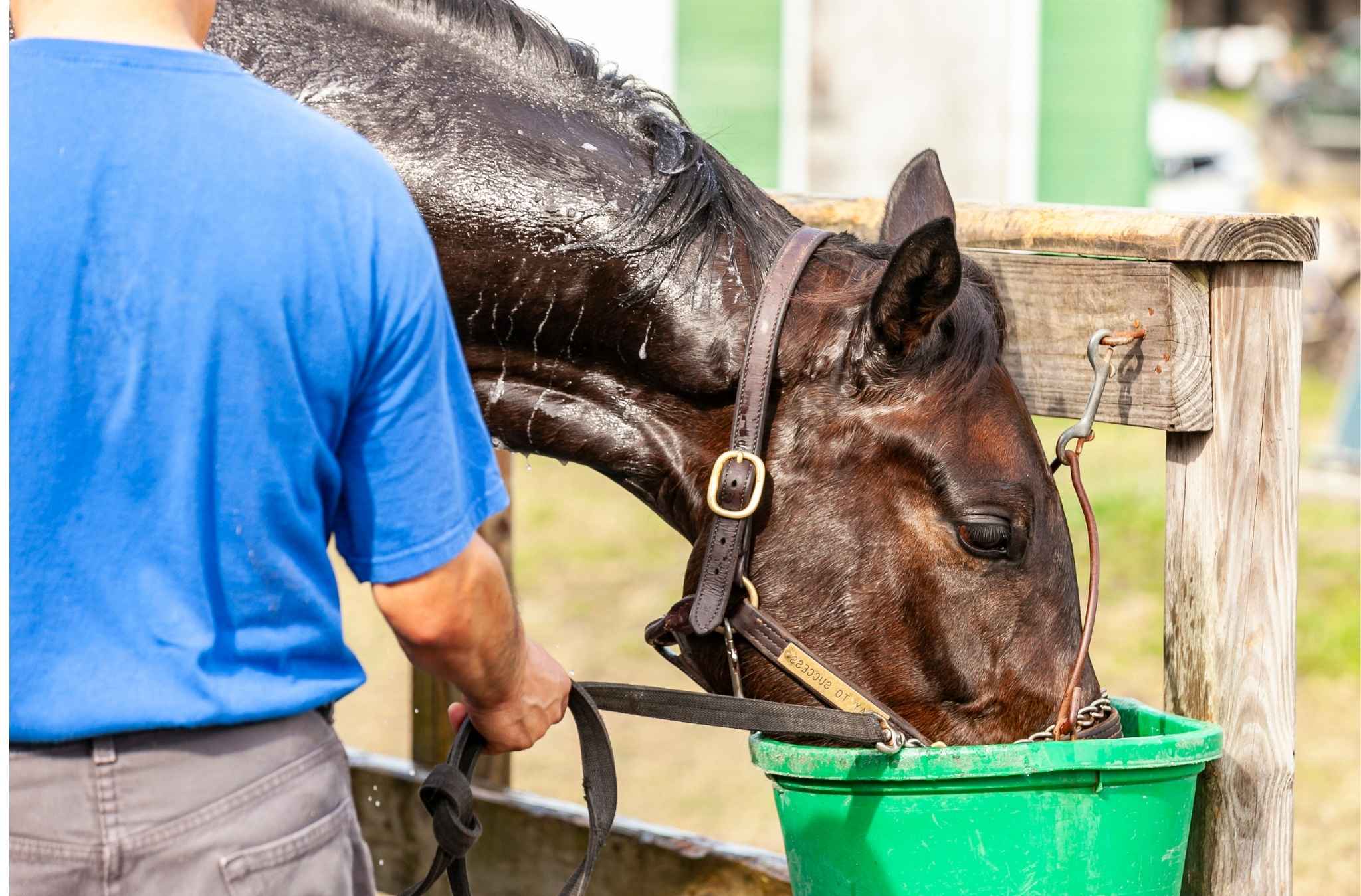
The sound of wheat and the cereal flakes contained in the mash are also interesting forrehydrate the horse after intense effortand therefore a loss of water by sweating. The latter have the peculiarity of throating water, which allows the horse to ingest hydrated foods.
But the rehydrating properties of mash are also beneficialduring the winter months,When horses spend long periods eating preserved fodder such as hay, which has a much lower moisture content than fresh grass.
Horses are alsooften reluctant to drink when it is colder.According to some research, they tend todrink up to 14% less waterDuring the winter months, where it is important to help them increase their consumption of water via food.
Travel and competitions can also increase the risk of dehydration, which can lead tocompromise both performance and horse recovery.Not to mention that some horses may be drinking when they are not in a familiar environment.
3. Facilitating transit
As we have seen, this statement is not true for all types of mash. This depends not only on theraw materials used(and their natural fibre richness), but also the quantity distributed. Priority thereforemash rich in vegetable fiberswhich will promote transit.
Cereal flake preparations will make starch more accessible to enzyme digestion. They will be better digested compared to whole grains and uncooked grains.
Finally, the mucilages brought by flax seeds will act as an intestinal dressing and are beneficial in case of a sensitive stomach or intestine.
4. Facilitating the recovery of a sick horse
The mash can be interesting forreintroduction of concentrates after recovery(e.g. post-operative) where only forage was fed.
It is also beneficial forhorses with dental problemsand who have difficulty chewing, as well as those with limited appetite, especially in weakened or elderly horses.
Finally, it can be beneficial for horses allergic to dust.
What precautions before giving his horse mash?
Mash has many benefits, provided certain conditions are met. First,mash must always be used in addition to fodder. Very concentrated in starch, this preparation should be given in a reasoned and spaced manner. The mash must also be the only concentrated food integrated into the horse's diet.
The mash must not beused more than once a week for active horsesand more than twice a week for highly sought after horses (such as racing horses).
In the event of a horse's recovery (and to help take a normal diet), its duration of distribution must berestricted to the period of recoveryand stop when the horse is again healthy.
Attention alsohorses susceptible to pathologies caused by excess starch such as forbure.This also applies to those who suffer from recurrent myositis.
Finally, and for health reasons, it is best to give the maximum mashwithin 24 hours Next its preparation.
Verdict: Should we give his horses mash?
Remember that the mash isan interesting alternative to a meal to give to your horseto enable it to rebuild its energy and water reserves, in addition to its benefits on intestinal transit. It is essential, however, to give it only once a week and to control the quantity distributed which must be adapted to each horse and in particular to its activity.
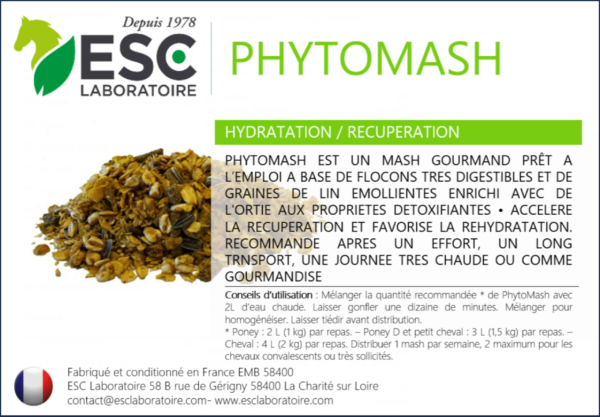
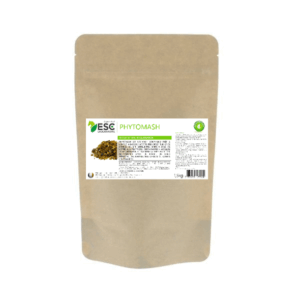
Our laboratory offers youPhytomash, a gourmet mashLoan for usewith very digestible flakesand emollient flax seeds enriched withthe absence of detoxifying properties. Our mash will support recovery and promote rehydration of your horse.