
Your horse scratches, rubs his mane or tail when the days come?
These seasonal itchings, often related to summer dermatitis, require appropriate external care.
ESC Laboratory offers a range of topical products: sprays, balms, shampoos and oils, formulated for sooth skin irritation and strengthen the skin barrier of your horse.
Local application, visible results, natural ingredients.
-
32 opinions
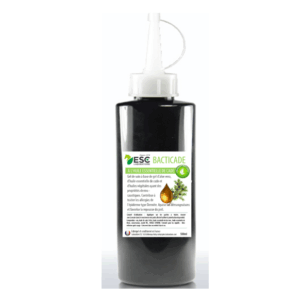
BACTICIDE – External care seasonal itching horse
- 26,60 € TTC
- Useful in case of seasonal itching if your horse scratches intense. Bacticade is a ready-to-use gel-based treatment product with soothing and sanitizing properties and essential oils (including Cade). 200ml bottle with pouring cap
- Add to cart
-
8 reviews
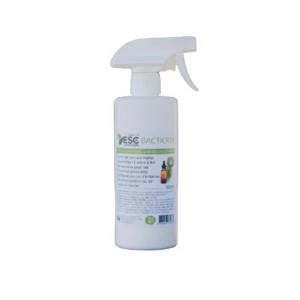
BACTICRIN – Purifying horse lotion – Enriched with essential oils
- 29,60 € TTC
- Bacticrin is a care lotion enriched with essential oils with purifying properties. Bacticrin helps to ease horse skin problems and skin irritation. Bottle spray 500ml
- Add to cart
-
20 opinions
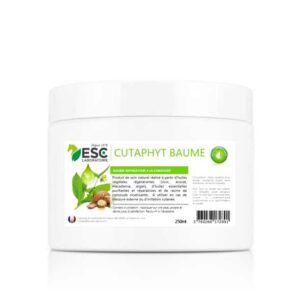
CUTAPHYT – Skin care balm enriched with comfrey
- 28,60 € TTC
- Cutaphyt balm is a natural care ointment formulated with plant extracts selected for their nourishing and purifying properties. Enriched with comfrey, it is designed for use as part of skin comfort and hygiene routines for horses. 250 ml jar.
- Add to cart
-
5 reviews
- Out of stock
ESSENTIAL CADE OIL - Skin irritation and external parasites horse
- 6,10 € TTC
- Essential Cade Oil (Juniperus Oxycedrus) Wood Size 10ml
- Read more
-
-
2 reviews
ESSENTIAL OIL OF LAVAND – Stress, skin, horse insects
- 6,90 € TTC
- Lavender essential oil (Lavandula officinalis). Bottle 10ml
- Add to cart
-
8 reviews
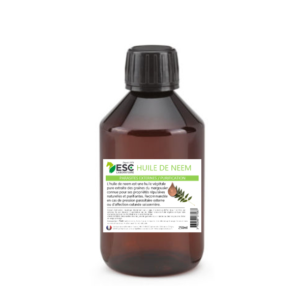
NEEM VEGETAL OIL – External parasites, horse purification
- 14,20 € TTC
- Neem oil is a pure vegetable oil extracted from the seeds of the margous tree known for its natural and purifying repellent properties. Recommended in case of external parasitic pressure or skin irritation following seasonal itching. Bottle 250ml
- Add to cart
-
Best Seller30 opinions
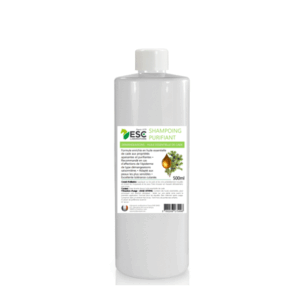
PURIFIANT SHAMPING – Seasonal horse itching – Enriched with cade essential oil
- 15,90 € TTC
- Formula enriched with essential cade oil with soothing and purifying properties. Recommended for seasonal irritation or itching. Formulated by ESC Laboratory Flacon 500ml
- Add to cart
Why external care is essential from the first signs
On the arrival of the fine days, many horses begin to rub repeatedly mane, tail base, breast, belly. These seasonal itching, often linked to hypersensitivity to culicoid bites (small, very active flies at dusk and dawn), can quickly cause skin lesions: hairs torn off, crusts, skin to live. The more the horse scratches, the more the lesions worsen and the more the skin becomes an entry door for secondary irritations.
The application of external care directly to affected areas addresses two immediate needs: sooth the itching sensation to break the scratch-lease cycle, and create a protective barrier on exposed skin. It is a local action, fast and targeted, complementary to an internal approach through food supplements, but indispensable for the daily comfort of the horse.
What type of care choose according to the situation
Skin intact, moderate itching: prevention and protection
From the first heat, and before the appearance of lesions, a preventive treatment allows to prepare the skin and to limit the intensity of the reactions. Formulas based on coconut oil, aloe vera or cade oil create a protective film on the skin and soothe light irritations. A suitable soft shampoo, used regularly, keeps the skin clean and reduces residues that attract insects.
Severe itching, rubbed areas: active relief
When the horse scratches actively, concentrated topical treatments, balms, creams or soothing lotions are indicated on the friction zones. Cade oil is particularly appreciated for its soothing and purifying properties on inflamed areas. Tea tree and lavender offer a calming synergy recognized in equine dermatological care. These products apply directly to the previously cleaned skin, 1-2 times a day depending on the intensity of the symptoms.
Open lesions, fragile skin: repair and protection
When scraping has caused damage (abrasions, crusts), healing and protective formulae should be preferred. Pure gel aloe vera and balms rich in natural active ingredients help support skin regeneration while preserving the skin from external aggression. Avoid products that are too alcoholic or too loaded with pure essential oils that can irritate already weakened skin at this stage.
Areas of the body to be monitored first in case of horse dermatitis
Summer dermatitis preferentially affects areas with low hair density and exposed to insect bites:
- Pine and neckline (most frequently affected area)
- Base and sub-tail
- Vente and ars
- Chest and shoulders
- Chopper and ears in very sensitive horses
Un soin régulier de ces zones clés : nettoyage, application du produit apaisant, protection si nécessaire avec un filet anti-insectes ou une couverture d’été constitue la base d’une routine efficace tout au long de la saison.
Comment optimiser l’efficacité des soins externes ESC
| Avant d’appliquer | Nettoyer la zone à l’eau tiède ou avec un shampoing doux. Sécher délicatement. Ne jamais appliquer sur une plaie saignante sans avis vétérinaire. |
| Fréquence | 1 à 2 applications par jour en période active. Réduire progressivement lorsque les démangeaisons s’estompent. |
| Durée de la cure | Maintenir les soins de mars à octobre, période d’activité des culicoïdes. Ne pas arrêter trop tôt même si les symptômes s’améliorent. |
| Association conseillée | Pour agir sur le terrain allergique en profondeur, associer les soins externes à un complément alimentaire adapté — les deux approches sont synergiques. |
En résumé : un soin externe efficace apaise rapidement les démangeaisons et protège la peau. Il ne remplace pas une action en profondeur, à compléter avec un complément alimentaire pour les chevaux particulièrement sensibles.
FAQ sur la dermite du cheval
Quels produits utiliser pour soulager les démangeaisons liées à la dermite estivale chez le cheval ?
Pour apaiser les démangeaisons saisonnières, on recommande des soins d’application locale : spray apaisant, baume nourrissant ou shampoing doux. Les formules à base d’huile de coco, d’aloé vera ou d’huile de cade sont particulièrement adaptées aux irritations cutanées estivales.
Quelle différence entre un soin externe et un complément alimentaire pour la dermite estivale ?
Le soin externe (spray, baume, shampoing) agit en surface pour apaiser rapidement les démangeaisons et protéger la peau. Le complément alimentaire agit de l’intérieur, sur le terrain allergique et la réponse immunitaire. L’idéal est d’associer les deux approches.
Comment appliquer un soin contre les démangeaisons sur un cheval sensible ?
Appliquer le soin sur une peau propre et sèche, en évitant les zones de lésions ouvertes. Masser doucement en remontant le poil. Répéter 1 à 2 fois par jour en période de forte activité des insectes. Consulter un vétérinaire en cas de lésions importantes.