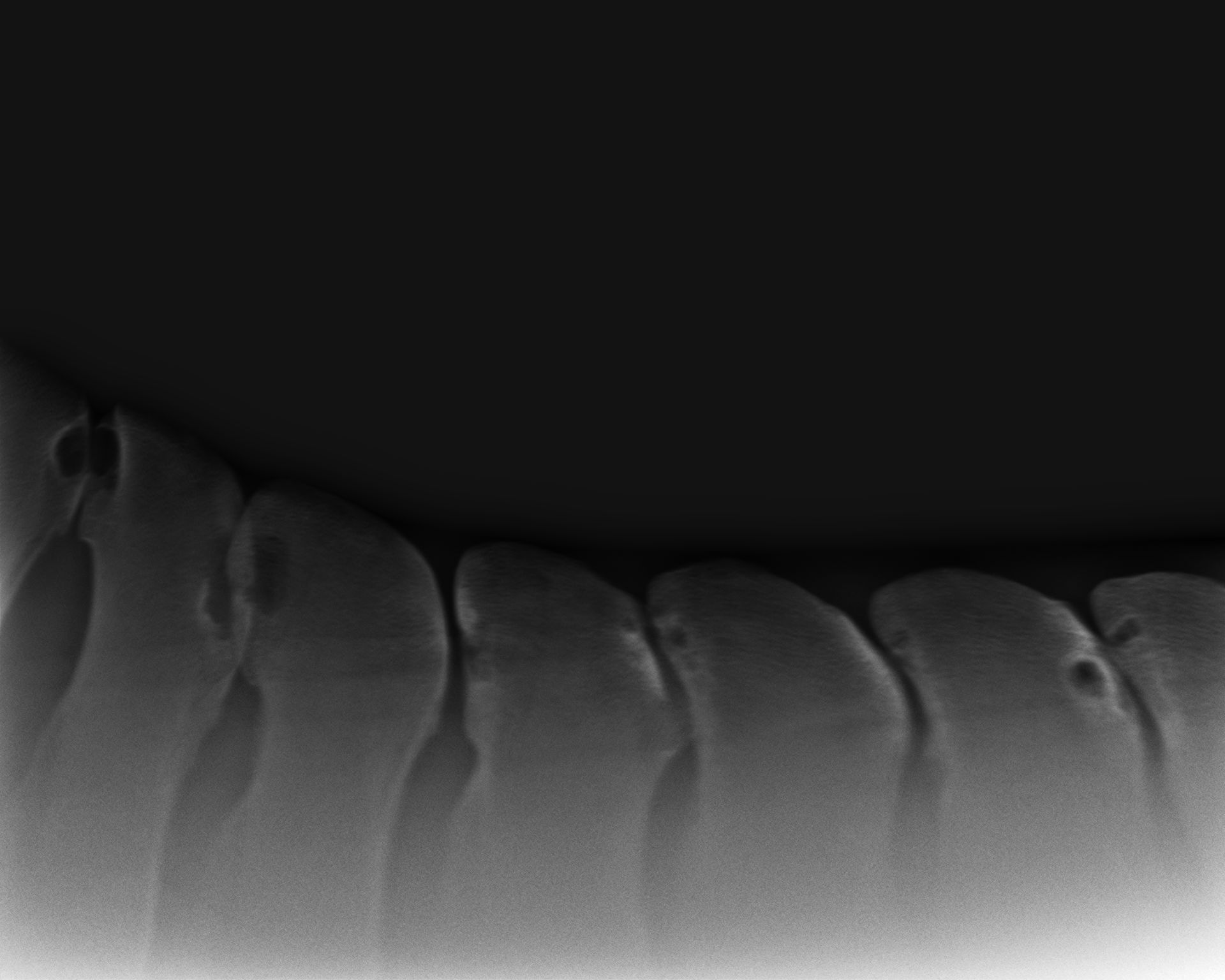
Back disorders in horses are a major concern for many owners. Among these problems, Thorny Process Conflicts (CPE), often referred to as Anglo-Saxon « Kissing spines », occupy a particular place. This still misunderstood affection generates many questions and can have a significant impact on the comfort and performance of our equine companions.
Events may be very variable from one horse to anothersometimes making recognition of this complex condition. Between real causes, observed consequences and accepted ideas circulating in the equestrian environment, it is essential to take stock.
The objective of this article is to help you better understand thorny process conflicts to adapt the work, environment and accompaniment of your horse and thus offer it the best possible conditions.
Thorny process conflict in the horse: what is it?
To understand this dorsal pathology, it is necessary to return to the bases of equine anatomy. The vertebral column of the horse consists of several types of vertebrae, each surmounted bybone projection called thorny process.
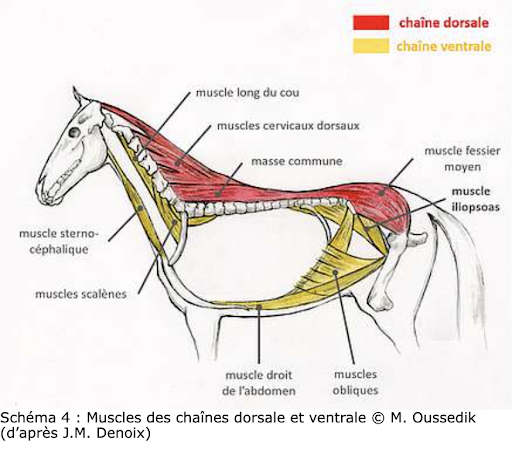
Source: Arioneo
Spiny processes are particularly long at the withers, up to 25 centimetres. Their length gradually decreases towards the rump. Between each thorny process normally exists an interthorny space, a real functional zone made of ligaments and soft tissue, indispensable for mobility, stress damping and the flexibility of the spine of the horse.
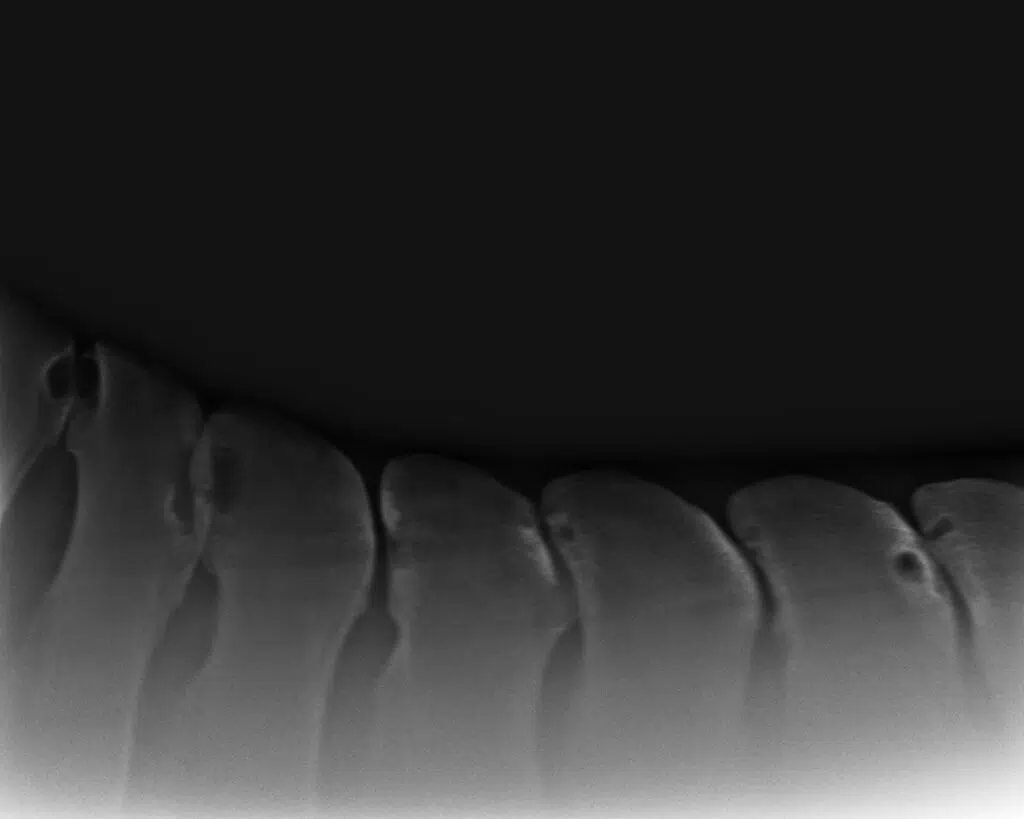
The term « conflict » means a situation where the thorny processes of two adjacent vertebrae are abnormally close, touch or even overlap. This excessive proximity leads to repeated bone contacts and abnormal mechanical stresses, which may affect bone structures and surrounding tissues
English « Kissing spine » This is illustrated in an imaginative way: process « touch » Like when you kiss, while they should stay away from each other.
Most common location
Thorny process conflicts do not develop uniformly along the spine. Some areas are more frequently affected, including thoracic and lumbar regionse, located approximately under the saddle and just behind it.
This distribution is explained by the large biomechanical constraints which these zones must bear, especially when the horse is mounted. The rider's weight, the repeated movements and the bending and extension phases, as well as the stresses during the work, generate high mechanical loads on these vertebrae. Therefore, regularly mounted sports and leisure horses are particularly exposed to the development of this pathology in these specific areas.
Why do some horses develop thorny process conflicts?
Thorny process conflicts are never caused by a single cause. They most often result from a a set of both individual, environmental and functional factors which, in combination, increase the biomechanical stresses exerted on the spine of the horse.
Morphological and individual factors
Some horses have natural predispositions related to their morphology, development and genetic heritage:
- Genetic component and morphological. Certain lines and morphological profiles, frequently encountered in sports horses, appear to be more exposed. Conformations combining a long back, a deep thorax and fine and close thorny processes favour mechanically their rapprochement.
- This type of morphology is often observed in blood horses, such as the English Pure Blood, without any race being completely spared.
- Back conformation. Un very long or very short backs, a particular orientation of the vertebrae or a marked withers may alter the distribution of stresses along the spine. When these characteristics are accompanied by a lack of back muscle support, some areas of the back are more sought after. This mechanical overload then promotes the rapprochement of thorny processes and increases the risk of interthorny conflicts.
- Postural compensation. Uasymmetry, irregular locomotion or a global imbalance may lead to adaptations which overload certain areas of the back.
Influence of lifestyle and work
The environment and living conditions of the horse have a direct impact on the health of its back.
- Lack of free movement. Umainly live in the box limits muscle development, coordination and flexibility of the column.
- Early or inadequate work. SIlliciting a horse too young or repeating mandatory exercises without variation can also increase the stress exerted on certain parts of the back.
- Muscle imbalance. Uinsufficient dorsal and abdominal musculature, poorly developed or asymmetrical allows bone and ligament structures to directly absorb excessive mechanical stresses.
What is often confused with causes
A widespread idea attributes thorny process conflicts exclusively to "bad riding". If it is true that mounted work and riders' interventions can be an aggravating factorHe is not solely responsible for this condition. An unbalanced rider, a heavy plate or inappropriate demands can actually accentuate the mechanical stresses on the back of the horse, but many other elements (morphological, postural, muscular and environmental) come into play.
The myth of « horse badly worked » therefore deserves to be nuanced. Some horses develop thorny process conflicts despite careful work, due to morphological or genetic predispositions. Conversely, other horses mounted approximately will never present this problem.
It's almost always several combined factors which explain the emergence of thorny process conflicts, not an isolated cause.
Signs that can alert to possible thorny process conflicts
Several signals must warn about the possibility that the horse has a dorsal condition, of which kissing spines may be part.
The signs visible in everyday life
Thorny process conflicts can manifest themselves in a progressive and sometimes subtle way in the daily life of the horse, long before obvious signs appear at work.
- Changes in behaviour are generally the first indicators. A usually calm horse that becomes irritable should attract your attention (although this may be related to other issues such as gastric ulcers, dental or joint pain).
- Reactions to bandage or braiding are particularly revealing. A horse that contracts its back, pinches its lips, puts down its ears or tries to bite when brushing certain dorsal areas probably expresses discomfort or localized discomfort. Similarly, the reactions during the bagging (horse which inflates his belly excessively, constantly moves or shows signs of agitation) may indicate back discomfort.
- The difficulty of relaxing represents another warning sign. A horse that remains tense in the box, sage or has difficulty rolling can feel an discomfort in the dorsal area.
The signs observed at work
It is often during the set work that demonstrations become more obvious, although they may vary considerably from day to day. Also, these signs may appear as the horse works.
- Defences and irregularities are important signals. Refusal to move forward, rushes, irregular appearances, horses that do not obey the transitions or that show reluctance to certain exercises are all possible manifestations. General rigidity, a back that seems « blocked » and difficult to mobilize, or asymmetry in movements should also attract your attention.
- The difficulty in engaging the posterior or in reaching out correctly often translates back discomfort. The horse struggles to correctly mobilize its upper line, remains on the shoulders and has short, small and little expressive looks. .
- Variability of symptoms frequently characterizes this condition. A horse may seem perfectly normal one day and show marked signs the next day, depending on many factors such as the intensity of the previous work, weather conditions, general fatigue or overall comfort.
Why are the signs sometimes discreet or intermittent?
This variability in CPE manifestations is explained by several mechanisms, including the horse's ability to temporarily mask its discomfort.
The equine organism has‘extraordinary adaptability'.
Faced with back discomfort, a horse can develop compensation strategies, changing the use of its muscles and posture to limit the stress of sensitive areas. That's why some horses learn to manage their discomfort and continue to work without expressing obvious signs. But the compensation mechanisms do not necessarily hold in time because they can lead to the emergence of new tensions, muscle imbalances and secondary damage, thus to the evolution of the pathology (it is called a stage linked to the osteoarthritis but also to the CPE).
How to identify thorny process conflicts?
Even when the signs have been present for a long time, the identification of thorny process conflicts is always useful: it allows to adjust the care, work and accompaniment of the horse in order to improve its well-being and quality of life.
The importance of veterinary examination
Facing evocative signs, only a equine veterinarian can make a precise diagnosis. The examination begins with a detailed collection of information on the history of the horse (lifestyle, work, symptoms, performance, etc.) and then the clinical examination includes:
- careful observation of the horse in motion, on a hard ground and a soft soil ideally.
- careful back palpation to identify sensitive areas
- evaluation of locomotion, on foot as mounted.
Imaging and its limitations
X-rays are the main tool for‘identification of thorny process conflicts in horses. They allow to visualize bone structures, evaluate interthornous spacing and detect possible bone changes.
However, one key point should be stressed: The radiographic aspect does not necessarily reflect the intensity of the discomfort felt by the horse. This is a fundamental notion that every owner must understand. A horse with multiple conflicts visible to the X-ray can be comfortable and efficient while another with minimal damage to imaging can express a significant discomfort.
This lack of direct correlation underlines the importance of a comprehensive approach, taking into account not only imaging, but also also and especially clinical signs, the behaviour of the horse and its ability to work.
What to do with thorny process conflicts?
In the face of a horse with thorny process conflicts, several levers help to improve its comfort, mobility and quality of life.
Veterinary and paramedical support
The veterinarian may propose different options depending on the intensity of the events and the objectives set. Frozen Infiltrations allow direct action on the areas concerned. Mesotherapy is another approach, as is the use of certain drug protocols adapted to each situation.
Paramedical professionals play an essential role in this overall management.
Equine physiotherapists can offer manual techniques and adapted exercise programs to restore mobility, muscle balance and back comfort. Equine osteopathy contributes to maintaining the general equilibrium of the structure and can help identify and accompany the compensations developed by the horse.
Prevention: the fundamental axis
Even more than accompaniment to an existing situation, prevention is the key to preserving the long-term health of the horse.
- Adapting the work without forcing the horse is the cornerstone of this prevention. It is not a question of limiting activity, but of designing it in a thoughtful, progressive and respectful way of the horse's biomechanics.
- Warming plays a key role. Starting each session with an appropriate heating phase allows the back structures to gradually prepare for the stresses. Effective heating includes handwork, relaxation movements and a gradual rise in intensity.
- Adapted exercises make all the difference for horses affected by dorsal sensitivities. Working on ground bars promotes engagement without undue stress. Neck extension exercises, performed correctly, encourage elevation and mobilization of the back.
Rethinking lifestyle to support back
Beyond the mounted work, your horse's daily living conditions greatly influence its back health.
- A horse moving freely every day Naturally retains joint flexibility and develops a more balanced musculature. Regular access to paddock or meadow, ideally on varied terrains that stimulate proprioception, allows these essential spontaneous movements.
- Equal social life (One of the pillars of the famous Friends of 3F of the horse) also plays a major role. A horse living in an overly restrictive environment, poor in social interaction and freedom of movement, promotes the emergence of tensions and compensation, even in a properly worked horse. Natural movement, interactions with congeners and the ability to express normal behaviours contribute to overall well-being and back health.
Care of equipment and frame
Think also of:
- Choose a perfectly adapted saddle to the specific morphology of your horse. An inappropriate saddle generates inappropriate mechanical stresses on certain areas of the back. Regular intervention of a qualified sadle-fitter is strongly recommended.
- Surrounding you with competent professionals. A teacher who is attentive to locomotion will be able to observe the subtleties of movement and adjust his work according to the reactions of the horse.
Supporting the organization as a whole
Beyond work and the environment, food supplements can also accompany the horse on a daily basis.
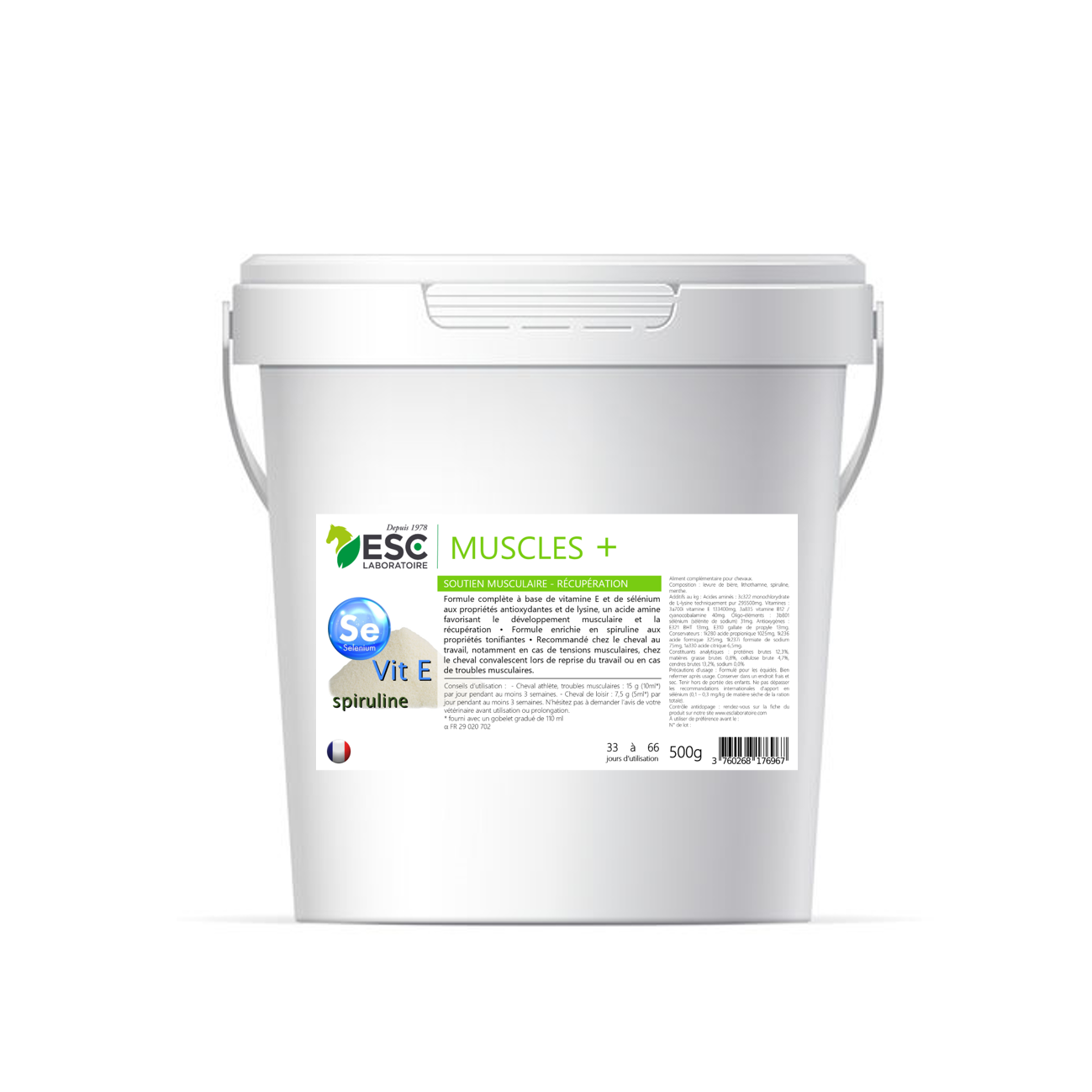
- To support muscle development and recovery, solutions such as Muscle +, enriched with vitamin E, selenium and lysine, contribute to the maintenance of a functional musculature, indispensable to support the dorsal chain
- Before effort, use of the Chile Warm Gel contributes to muscle preparation. This plant-based gel applies locally before the effort to promote local heating of the affected areas.
- During periods of intense pressure, as in competitions, Hippocramps may accompany the horse's body in the face of point muscle constraints.

These solutions are part of a comprehensive approach to horse support and no substitute for veterinary monitoring and the basic measures to adapt work and lifestyle.
The Word of the End
The thorny process conflicts recall one essential thing: each horse has its own functioning and its own limitations. Behind a sensitive back, there is often a set of signals to listen to, not a simple X-ray to interpret. By carefully observing your horse, adapting its work, its living environment and its diet, but also by surrounding you with good professionals, it is possible to offer it a more comfortable and serene daily.
FAQ – Chilling spines in horses
Are thorny process conflicts common in horses?
They are relatively common, especially in horses regularly mounted. On the other hand, the presence of radiographic signs does not necessarily mean that the horse feels an embarrassment in everyday life.
Can a horse with thorny process conflicts continue to work?
Yes, in many cases, provided the work is adapted to its level of comfort, strength and functional abilities. It is the reactions of the horse, much more than the images, that must guide the adjustments.
Do thorny process conflicts necessarily worsen over time?
No, their evolution depends heavily on the way of life, type of work, equipment and accompaniment. A suitable framework can maintain a good balance over the long term.
Is walking recommended in case of kissing spines?
Working on foot is often an excellent tool to develop muscles and flexibility without weight on the back. However, it must be done carefully, in a fair attitude and on appropriate exercises.
Are certain disciplines incompatible with Kissing Spines?
There is no absolute rule: everything depends on the horse, its comfort and the way discipline is practiced. Adjustments are sometimes necessary to respect its limits and preserve its well-being.
What role does feeding play in a horse affected by thorny process conflicts?A balanced diet helps to maintain good body condition and functional muscles, essential for supporting the spine. It is always part of a comprehensive approach, complementing work and lifestyle.
Clementine Heesse-Pesnel is marketing and marketing manager at ESC Laboratory, specialist in equine herbal therapy. An amateur rider and owner of horses, including purebred racers, she is passionate about care products and natural solutions to accompany the horse's health and well-being.