
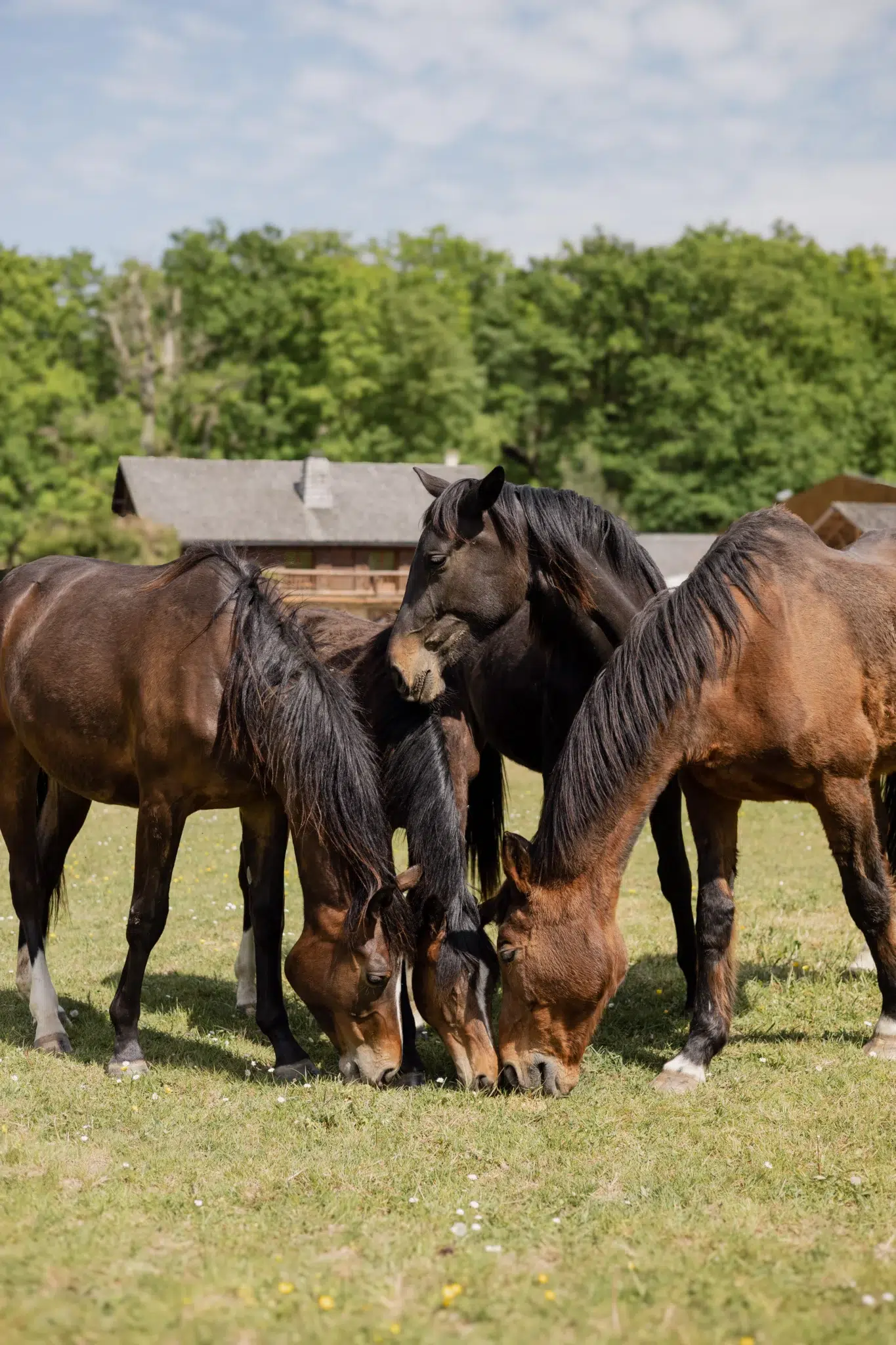
Relieving a heat mare: behaviours, frequent signs and natural solutions
Heat in the mare are a natural phenomenon... But they can quickly become a real challenge on a daily basis. Changes in behaviour, nervousness, discomfort, decreased concentration at work: some mares experience this period in a very marked way, leaving their poor owners in the face of sometimes misunderstood reactions.
Should we worry? How relieve a mare in heat Without rushing her or disturbing her natural balance? In this article, we help you to recognize the signs of a mare in heat, to make the difference between normal behavior and real discomfort and to discover natural and concrete solutions to accompany your mare throughout its cycle.
Juice in heat: understand what's going on
The heat in mare They are part of its natural functioning, but they can be accompanied by sometimes confusing changes. For better relieve a mare in heatIt is essential to understand what is happening in his body, both hormonally and behaviourally.
The breeding cycle of the mare
The mare has a seasonal oestral cycle, mainly active from spring to late summer, when the days extend. Each cycle lasts on average 21 days, with a period of heat (ostrus) about 5-7 days.
Source: Ontario.ca
During this phase, the organism naturally prepares for possible reproduction, under the effect of marked hormonal variations. Some mares express these heats discreetly, while others live them more intensely, with more visible impacts on their behaviour
Why do heat change the behavior of the mare?
The hormonal fluctuations directly influence the behaviour of the mare in heat. They can change its energy level, concentration capacity and tolerance to external stimulation.
It is common to observe increased agitation, unusual nervousness, impatience to work or a more pronounced search for social contact with other horses. These reactions do not reflect a « bad character », but a sensitivity temporarily exacerbated by the heats of the mare.
The physical signs associated with the heats of the mare
The signs of heat in mare can also be physical. For example, you can observe:
- Agitation;
- Lack of appetite;
- Excessive drinking and urine;
- An increase in its flanks with a breathing (usually faster and deeper);
- Mucus loss in her vagina;
- Muscle tensions (especially in the dorso-lumb zone);
- An embarrassment in her locomotion.
Being able to distinguish these normal manifestations from a excessive discomfort is essential. Careful observation makes it possible to adapt the environment, work and care to accompany the mare in a way that is respectful and consistent with its real needs.
How to recognize a mare who suffers or is embarrassed by its heats?
Not all mares live their heat in the same way. If some changes are considered to be normal, others may translate a more pronounced discomfort related to the heats of the mare. Learning to spot these signals makes it possible to act more accurately and prevent discomfort from settling in.
Behaviours to be monitored in a hot mare
One mare in embarrassed heat can show unusual agitation, move more to the box or paddock, or seem more difficult to channel. Some have episodes of colic light and transientoften related to the cycle period.
The heat mare may also have strong reactions to Breading or handling (due in particular to back pain, i.e. greater sensitivity of the back and pelvis). You can observe:
- ears lying down,
- tensions,
- unusual defense.
These signals deserve your attention, especially if they repeat each cycle.
Note that in competition mares you can observe other ovulation discomfort behaviours. The anatomical proximity of the ovaries to the lumbar region may explain increased back sensitivity during ovulation. The mounted work can be more difficult when the mare is in heat. For example, it may refuse to move or its strides will be reduced/limited.
When should we worry?
Discomfort becomes more worrying when behavioursaggravate or persist beyond the heat period. Loss of appetite, lasting stress or a net deterioration of general behaviour must alert you.
It is essential that distinguishing a one-off discomfort, linked to natural hormonal fluctuations, from a deeper evil-being requiring an adaptation of the accompaniment of the mare in heat.
Effective strategies to relieve a daily hot mare
Heat can be a delicate time for the mare and her entourage. Fortunately, simple strategies around its environment, its work and stress management can greatly contribute to improving comfort without resorting to heavy medical solutions.
Note: In order to relieve a mare in heat at best, it is initially recommended to use a gynaecological examination performed by your veterinarian. For mares in which the heat would cause particularly severe behavioural problems, your veterinarian may prescribe hormonal treatment or more rarely advise you bilaterally. In any case, a thorough examination of the genital tract (ethography) is recommended in order to find a possible cause for these behavioural disorders.
The role of environment
One quiet, stable and predictable environment already helps a lot to soothe a mare in heat. Removing sources of agitation (strong noises, frequent passages in front of the box, equipment that fall...) helps to reduce tensions.
The 3F of equine well-being (Friends, Drilling and Freedom) play a major role here:
- Friends : being surrounded by congeners with whom she understands allows the mare to feel safe, to communicate and to have soothing interactions, essential to her emotional balance.
- Drilling : having continuous forage occupies the mare much of the day, helps to settle mentally and limits the boredom often exacerbated during heats.
- Freedom : to be able to move freely, walk, explore or simply choose where to sit helps to relax physical tensions and to respect its natural needs of movement.
Varying daily activities (hand-to-hand walks, soft transitions between areas, alternating access to different spaces) also allows for channel energy without forcing mare.
Adjust the mounted or walking work of a heat mare
During periods of peak heat, it may be useful to reduce intensity or modify meetings : a less physically demanding approach while remaining mentally stimulating.
The softer activities as walking or free work can offer an interesting alternative. These formats promote trust and mobility without rushing the mare or overly soliciting her attention.
Encourage relaxation after each session (by a return to progressive calm, several minutes of slow walking or a dressing) promotes the general well-being of a mare in heat.
Managing stress factors during the heat of a mare
For many mares, the heats are accompanied by a increased sensitivity to external stimulation. We therefore advise you to reduce anxiety factors whenever possible. Consider in particular:
- Limit sudden or repetitive noises around the box or paddock.
- Avoid frequent changes in the use of time (exit hours, different people at dressing).
Maintain a calming and predictable routine, especially during periods of marked heat.
Power supply to accompany the heat mare
Food plays a key role in the way a mare lives its heats. A base of quality fodder, distributed in sufficient quantity, contributes to the digestive and emotional stability of your horse. In contrast, excess energy, especially from rations too rich in sugar or starch, may increase excitement, agitation or behavioural discomfort during hormonal peaks.
Magnesium also plays an important role in the nervous balance of the mare: sufficient intake helps to limit agitation and exacerbated reactivity during heat. The omega 3, notably via Flax oilparticipate in general anti-inflammatory support and can help the body to better manage hormonal variations.
Natural supplements
Some plants and nutrients are traditionally used to support the nervous and emotional balance of equidae. They can help the body to better manage hormonal variations, while respecting the common digestive sensitivity in hot mares. The objective is not to « block » heat, but accompany the mare so that it is more "comfortable" and serene.
The wheeler and I'm a thousand leaves, are traditionally used to accompany ovarian comfort and support the hormonal balance of the mare during heat. Vervein And they are recognized for their soothing action on spasms and tensions, contributing to a better general comfort during this sensitive period.
Le hops and Matrical chamomile are appreciated for their calming effect on the nervous system, helping the mare better manage peaks of agitation associated with hormonal fluctuations. Raspberry macerate is also recognized for its support in case of sensitivity during heat; it is used in treatments of 3 weeks, with a break of one week between each cure
In this context, natural supplements formulated for the well-being of heat mares can find their place in its daily ration. For example, our laboratories have developed:
- Regul Plus, a supplement helps to support the natural hormonal balance and accompany the comfort of sensitive mares during their cycle ;
- Regulmix : a mixture of 8 plants traditionally used to accompany the comfort of the mare during their cycle and to limit the associated behavioural discomforts.
These complements easily integrate with feeding the mares in heat, in targeted cures or over sensitive periods, always consistent with the lifestyle and individual needs of the mare.
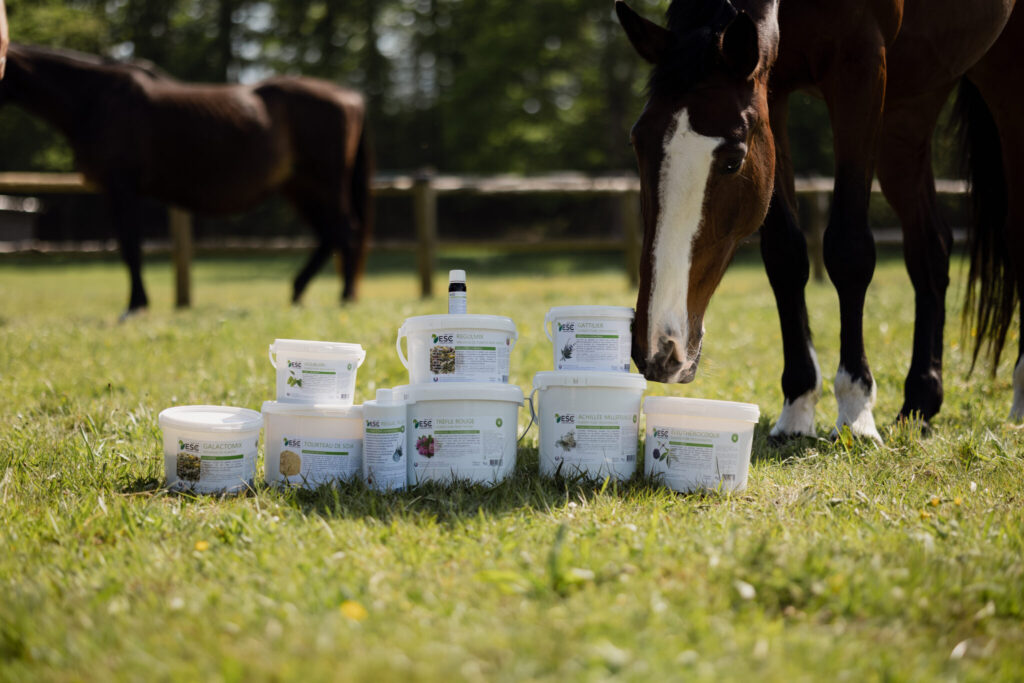
Complete protocol of ESC Laboratory for heat mares
En cas d’irritabilité, sensibilité ou baisse de performances, identifiez en priorité une cause organique (déséquilibre hormonal, kyste ovarien, endométrite…). Si aucune cause médicale majeure n’est détectée, une approche phytothérapeutique peut être mise en place.
En plantes déshydratées (3 à 6 semaines à pleine dose) :
- the gattilier pour l’équilibre hormonal,
- I'm a thousand leaves pour son effet antispasmodique,
- le houblon pour son action régulatrice.
- Les formules complètes comme Regulmix ou les extraits liquides type Oestropulse peuvent être utilisés sur des cures prolongées.
En gemmothérapie : le macérât de raspberry, 3 semaines par mois pendant 1 à 3 mois.
⚠️ Les cures courtes sont souvent insuffisantes : une phase d’imprégnation, de 1 à 3 semaines selon la formule choisie, est nécessaire.
FAQ – Soulager une jument en chaleur
Comment savoir si ma jument est en chaleur ou simplement nerveuse ?
Les chaleurs de la jument s’accompagnent souvent de signes cycliques et répétitifs : clignement de la vulve, fouaillement de la queue, changements d’attitude face aux congénères. Une nervosité sans lien avec le cycle est généralement plus ponctuelle et dépend du contexte.
Est-ce que toutes les juments réagissent de la même façon aux chaleurs ?
Non, chaque jument exprime ses chaleurs différemment : certaines restent discrètes, d’autres montrent des changements marqués de comportement ou de confort. L’intensité dépend de l’individu, de l’âge, du mode de vie et de sa sensibilité hormonale.
Une jument peut-elle tomber enceinte si elle présente ces comportements ?
Oui, ces comportements correspondent souvent à la période d’œstrus, durant laquelle la jument est réceptive à l’étalon et peut être fécondée. Une gestion adaptée de sa socialisation est donc essentielle si la reproduction n’est pas souhaitée.
How long does the heat of a mare last?
Les chaleurs de la jument durent en moyenne 5 à 7 jours et se répètent environ toutes les trois semaines pendant la saison de reproduction, principalement du printemps à la fin de l’été.
Des compléments naturels peuvent-ils aider à soulager les chaleurs d’une jument ?
Des compléments naturels peuvent accompagner l’équilibre émotionnel et le confort général de la jument en chaleur, en soutien d’une alimentation et d’un environnement adaptés, sans remplacer un suivi global.
Quand faut-il demander l’avis d’un vétérinaire pour une jument en chaleur ?
Un avis vétérinaire est recommandé si les comportements de la jument en chaleur deviennent intenses, persistants ou s’accompagnent de douleurs, d’une diminution de sa condition physique générale ou de troubles digestifs, afin d’écarter une cause autre que le cycle naturel.
Les chaleurs sont un processus naturel qui rythment la vie des juments, mais si elles s’accompagnent de comportements marqués, elles méritent votre attention afin de la soulager autant que possible. Pour soutenir le bien-être de votre jument, il est essentiel d’adopter une approche globale : adapter le travail, offrir un environnement apaisant et veiller à une alimentation équilibrée. Les compléments alimentaires naturels pour juments permettent de les accompagner en période de chaleurs, en contribuant à leur confort général et comportemental, tout en respectant leur physiologie.
Dr Marc Burin des Roziers est docteur vétérinaire équin, diplômé de l’École nationale vétérinaire d’Alfort (1999). Spécialisé en orthopédie du cheval de sport et en ophtalmologie, il a exercé pendant plus de dix ans en clinique équine avant de rejoindre ESC Laboratory en 2018. Passionné par les plantes médicinales, il conçoit les formulations des produits et contribue à l’expertise scientifique de la marque.